

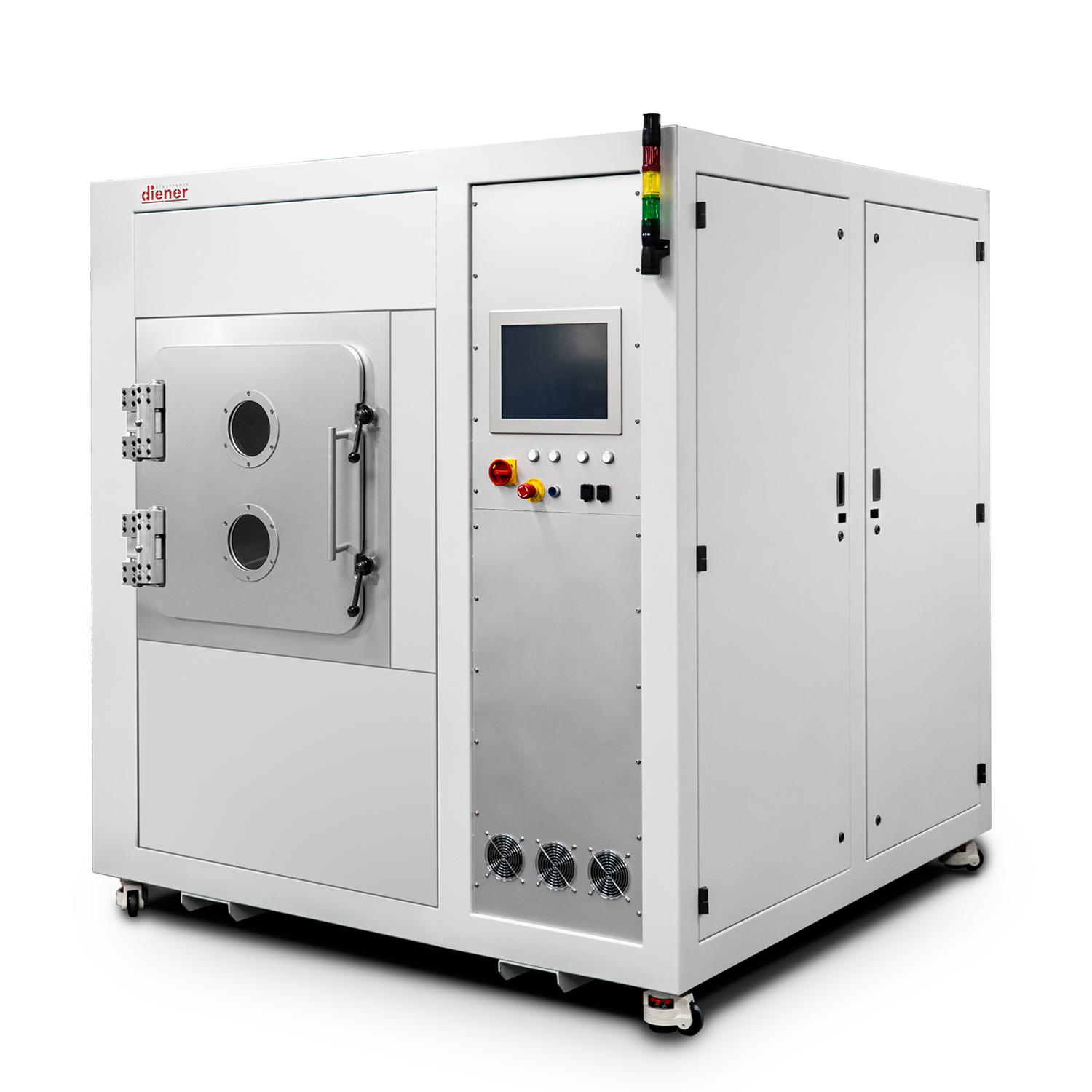
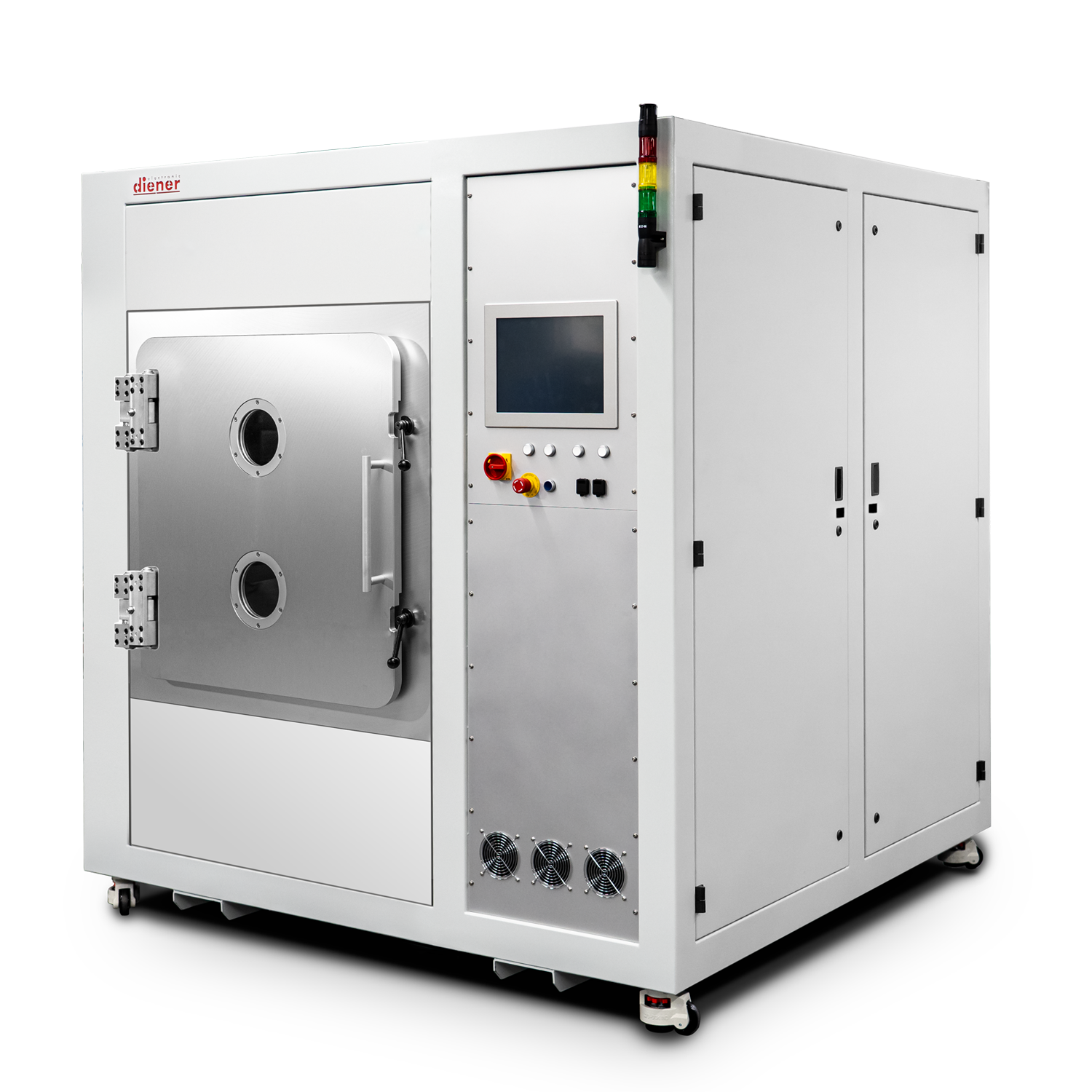
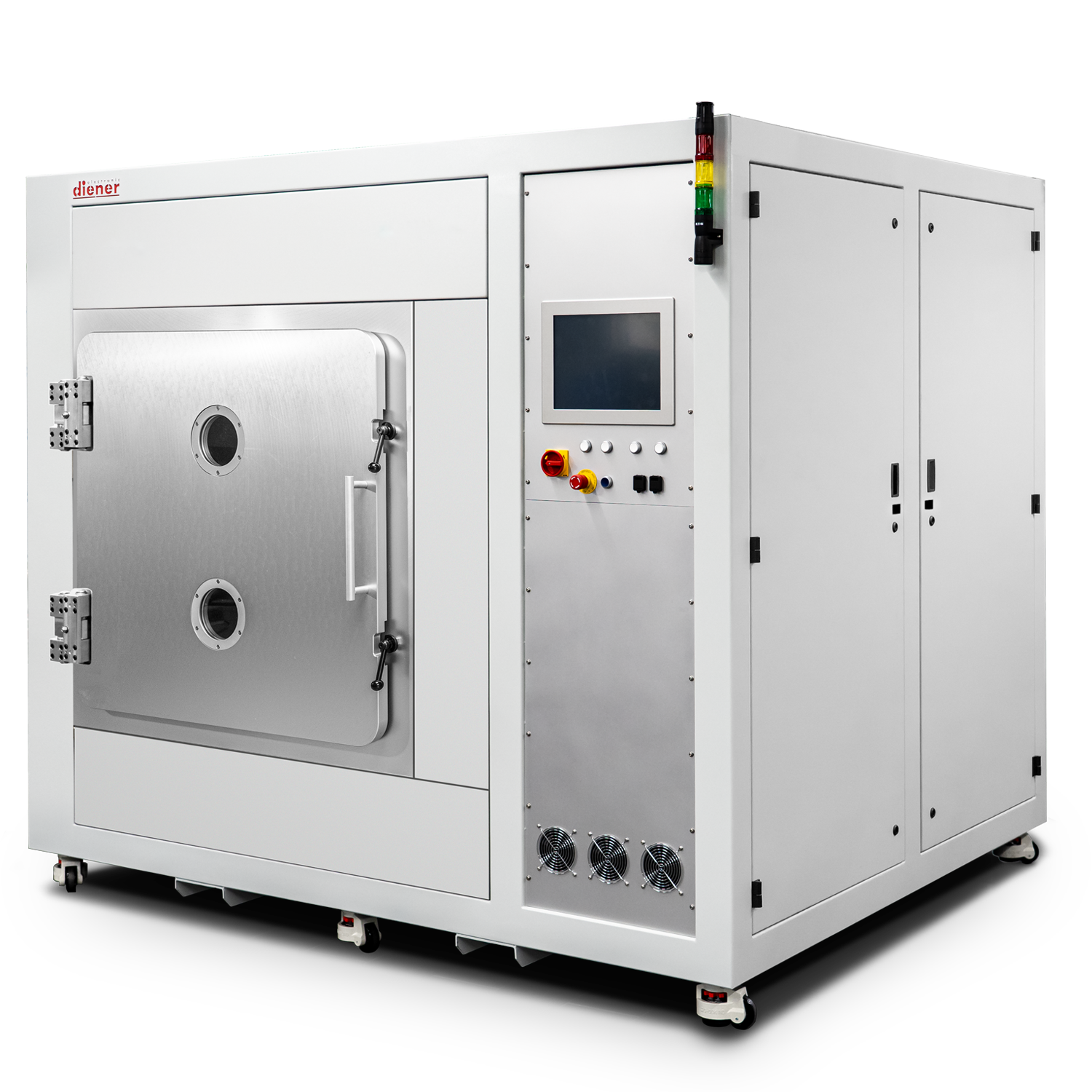
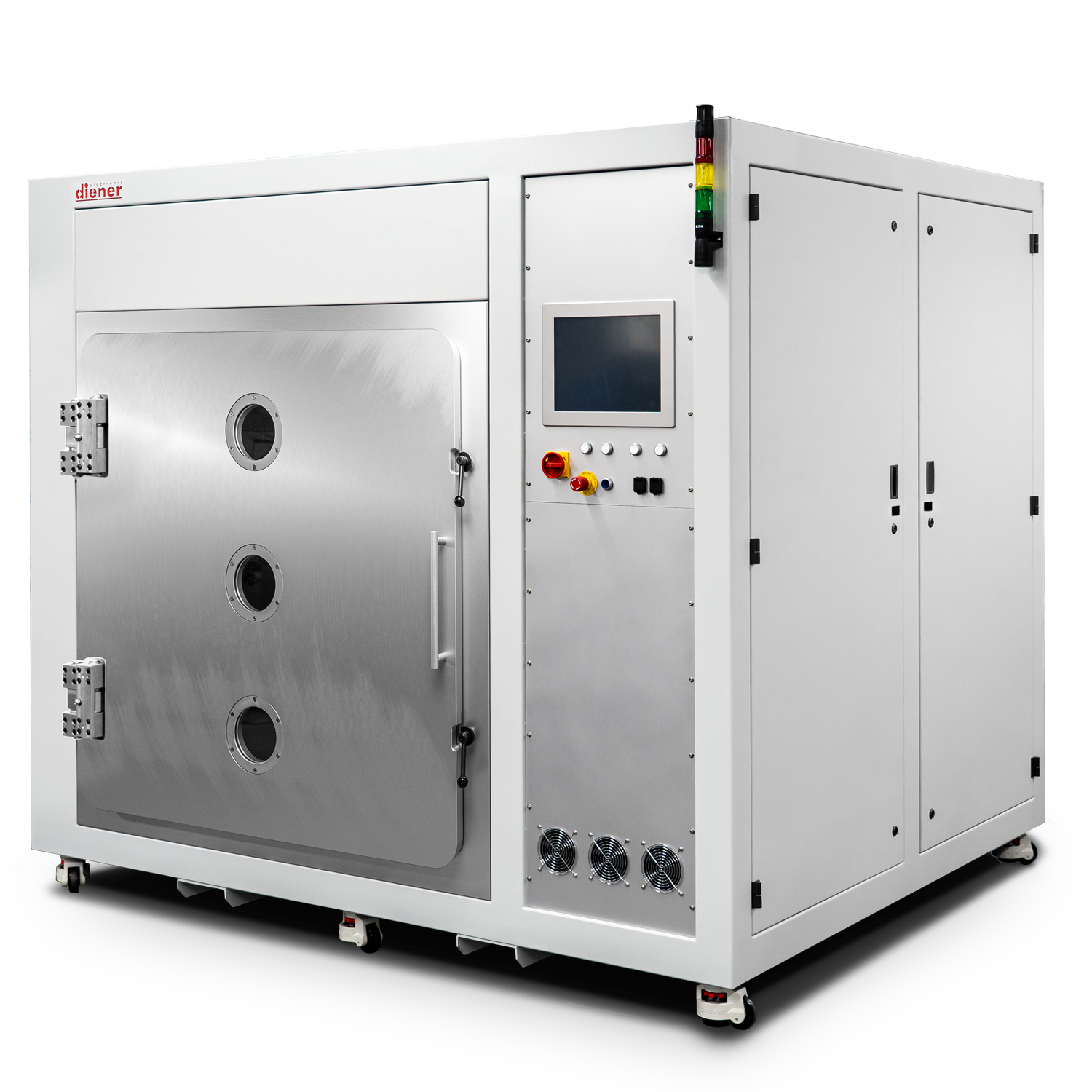
Low-Pressure PlasmaPlasma system Tetra 270
High capacity for large workpieces in a compact housing
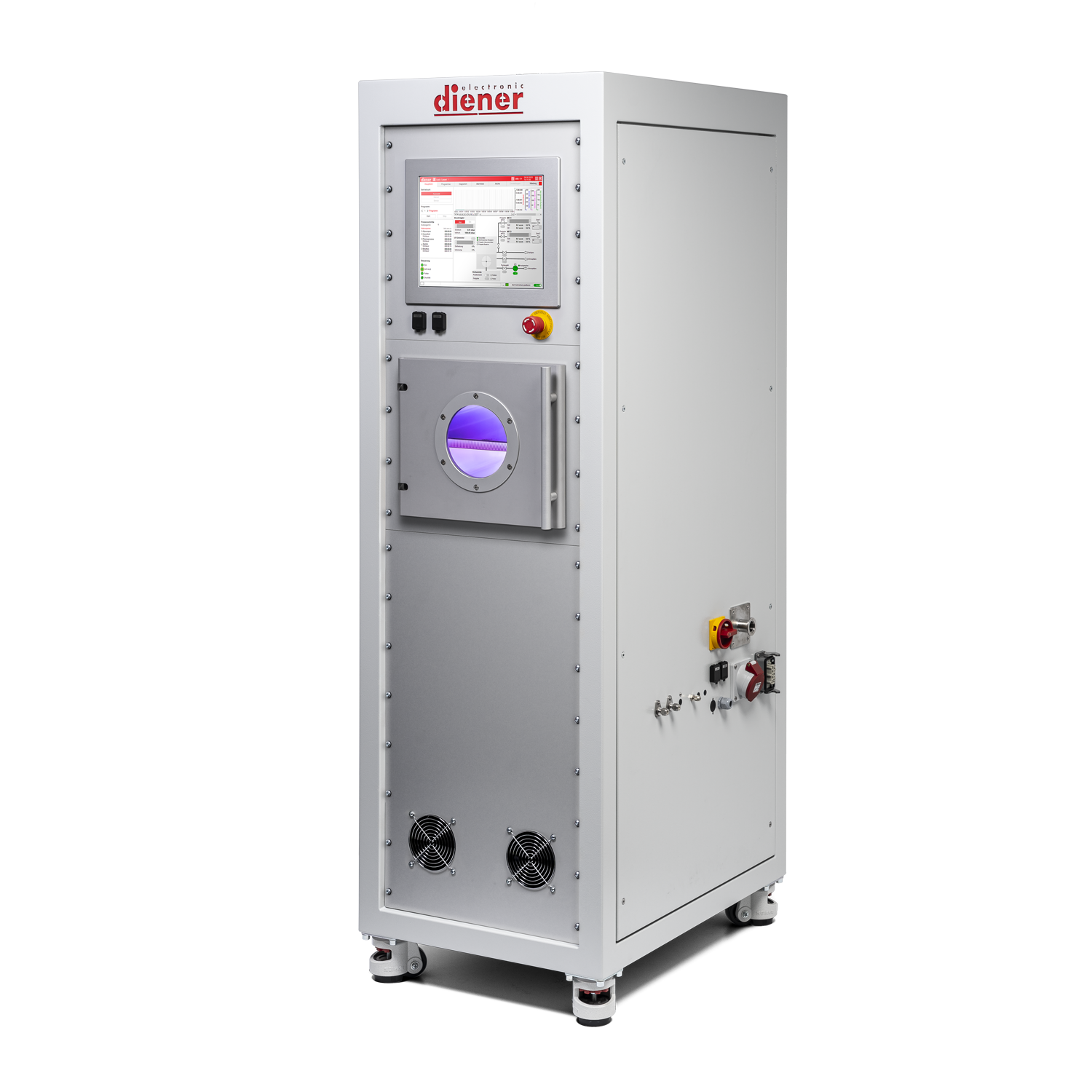
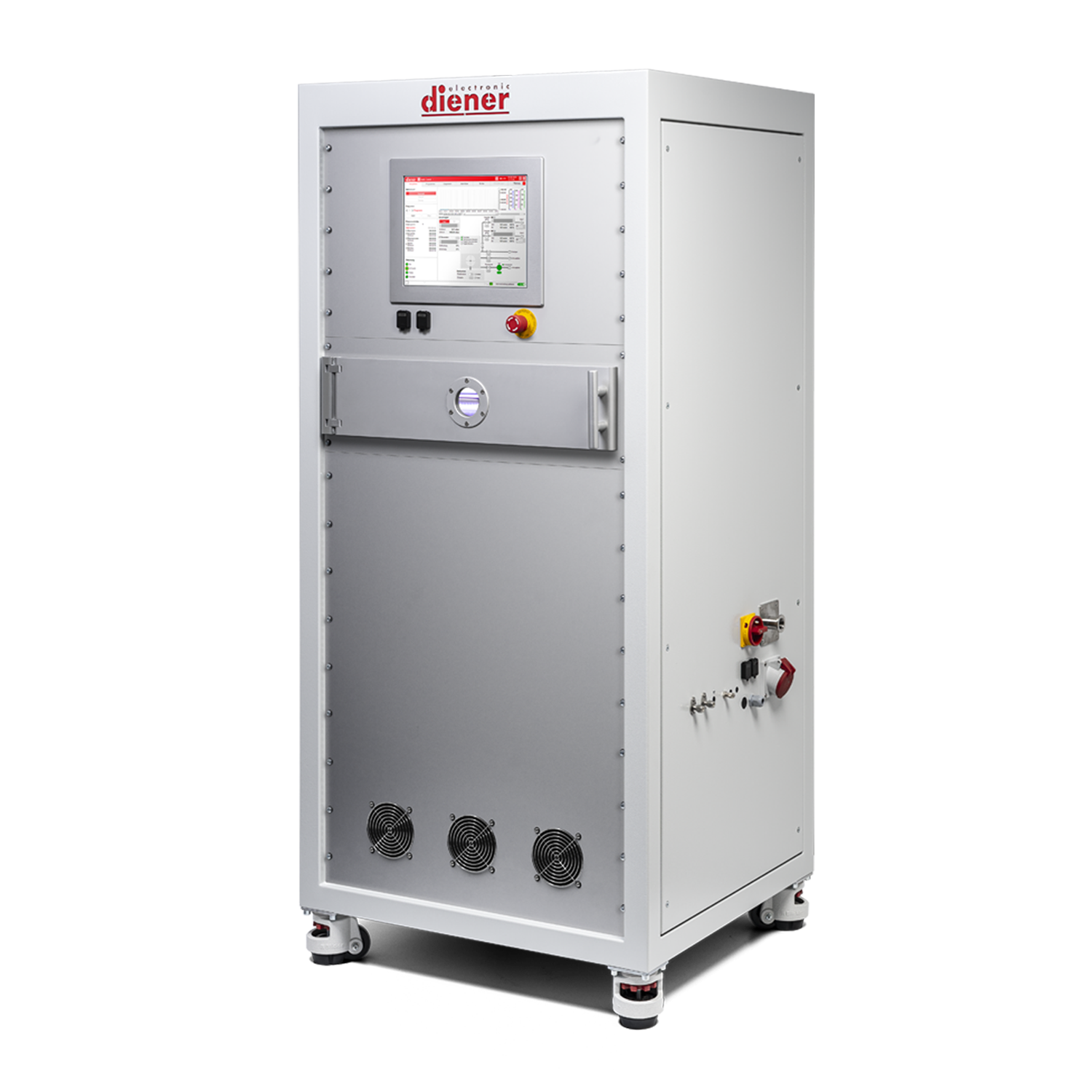
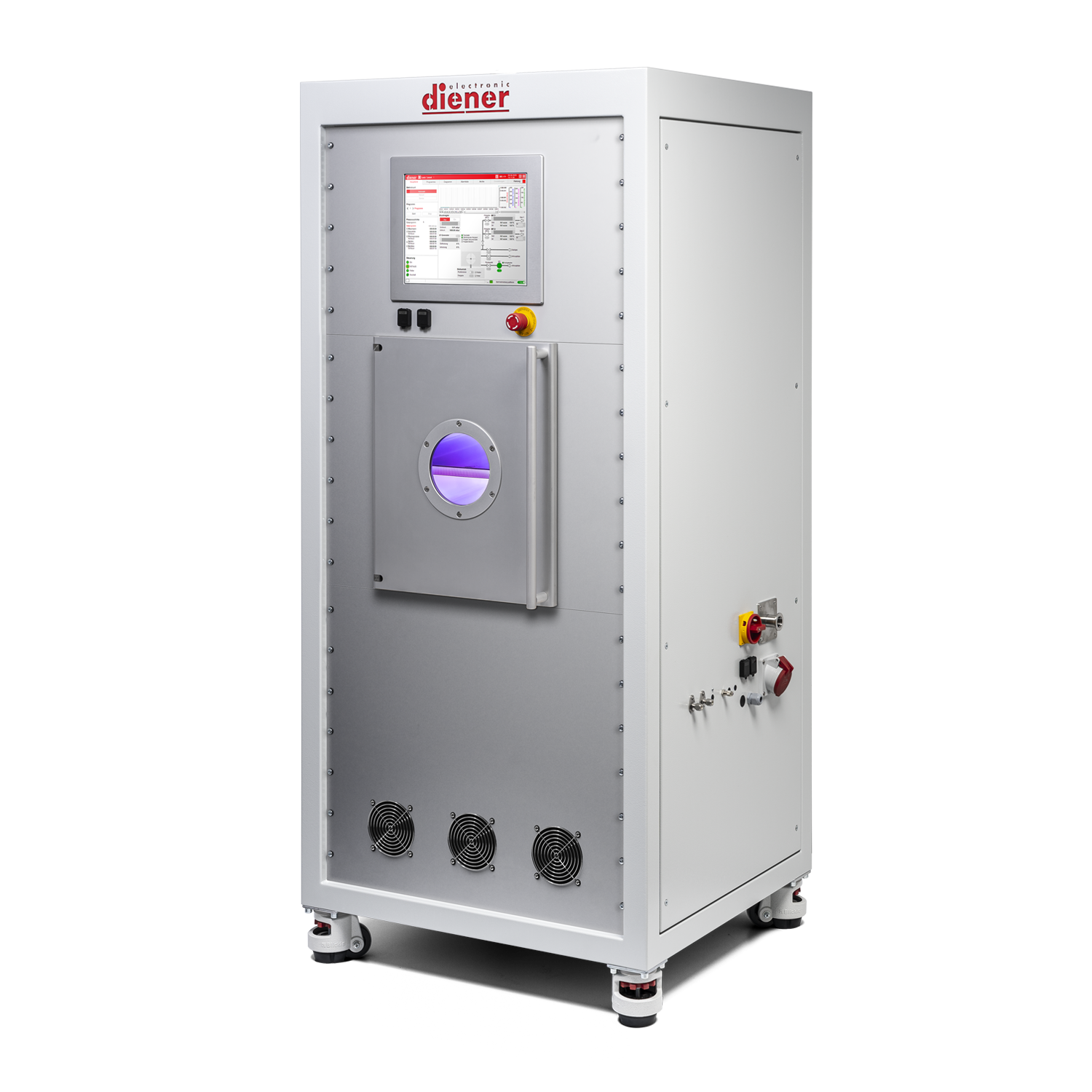
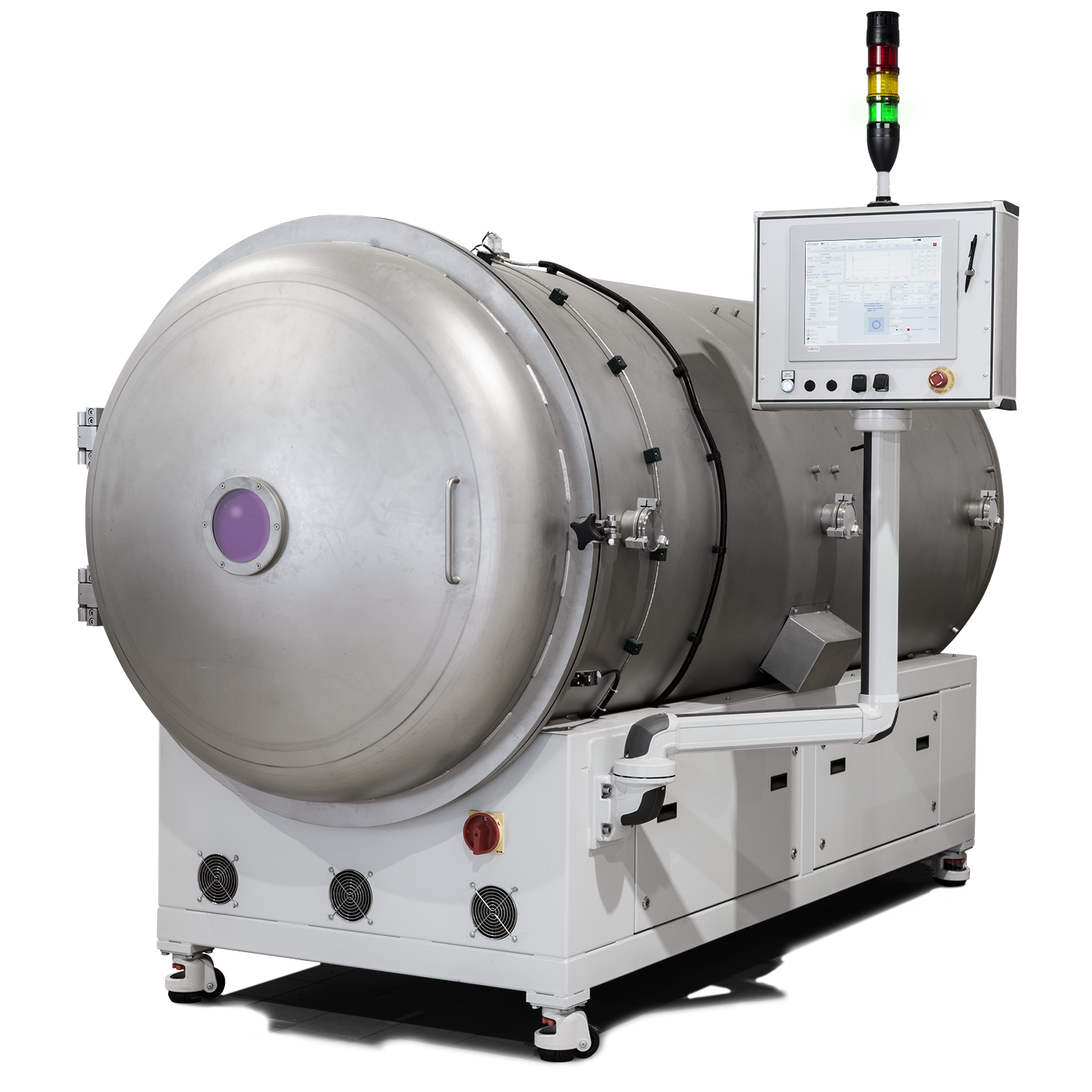
With a chamber volume of 270 litres and vacuum technology designed for short evacuation times, the system enables efficient, reproducible processes. Despite its high volume capacity, the plasma system features a compact, space-saving housing.
Start an inquiry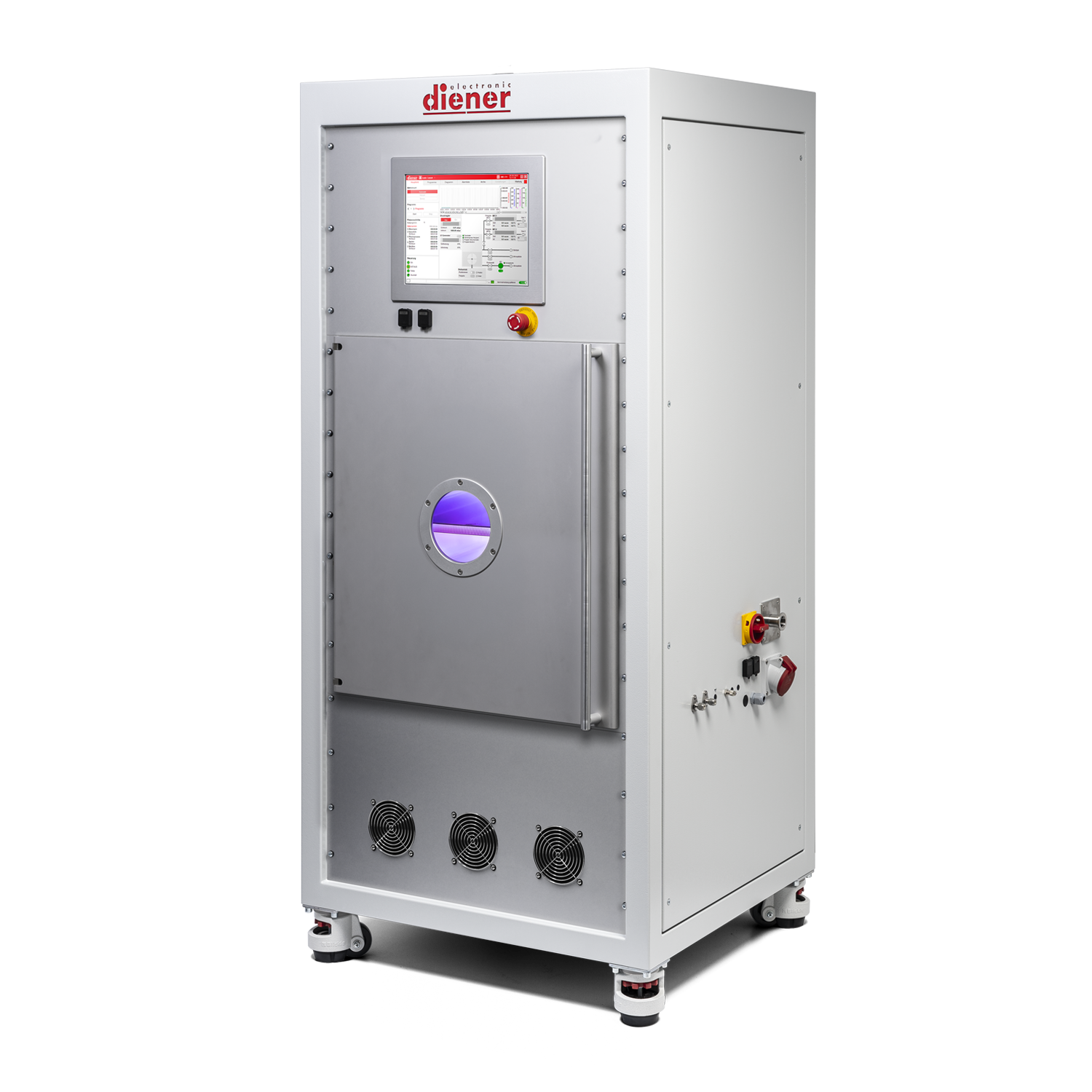
High-performance, compact plasma system for large components
With its generous chamber volume of 270 litres, the Tetra 270 offers sufficient space for large-format components or multiple components in a single process step. This reduces set-up times and increases productivity.
A particular advantage of the system is its optimised vacuum technology, which is designed for short evacuation times. This shortens process cycles and increases the cost-effectiveness of surface treatment – particularly in repetitive production runs.
The Tetra 270 plasma system can be individually configured to suit your requirements. A range of control options, process modules and extensions allow for precise customisation to meet your needs. Process data can be documented and archived to ensure a high level of process reliability and traceability.
The Tetra 270 is suitable for cleaning, activation, etching and coating a wide variety of materials and supports downstream processes such as bonding, coating or painting.

Cleaning
The Low-Pressure Plasma system Tetra 270 offers solutions for ultra-precise cleaning of all surfaces, for every substrate, and for every post-treatment process. Plasma cleaning removes all organic residues without subjecting the component to chemical or thermal stress.
More information
Coating
The Low-Pressure Plasma Tetra 270 system can also modify surfaces by applying a coating. Plasma coating can be used to deposit hydrophobic, hydrophilic, protective, or insulating layers of any kind.
More information
Activation
Good surface wettability is a prerequisite for the adhesion of bonding partners during painting, gluing, printing, or bonding. Plasma activation using the Low-Pressure Plasma Tetra 270 system creates polar bonding partners and increases the surface energy.
More information
Etching
The plasma technology of the Low-Pressure Plasma Tetra 270 system enables anisotropic and isotropic etching. This results in the nanostructuring of surfaces, which increases their surface area and improves adhesion.
More information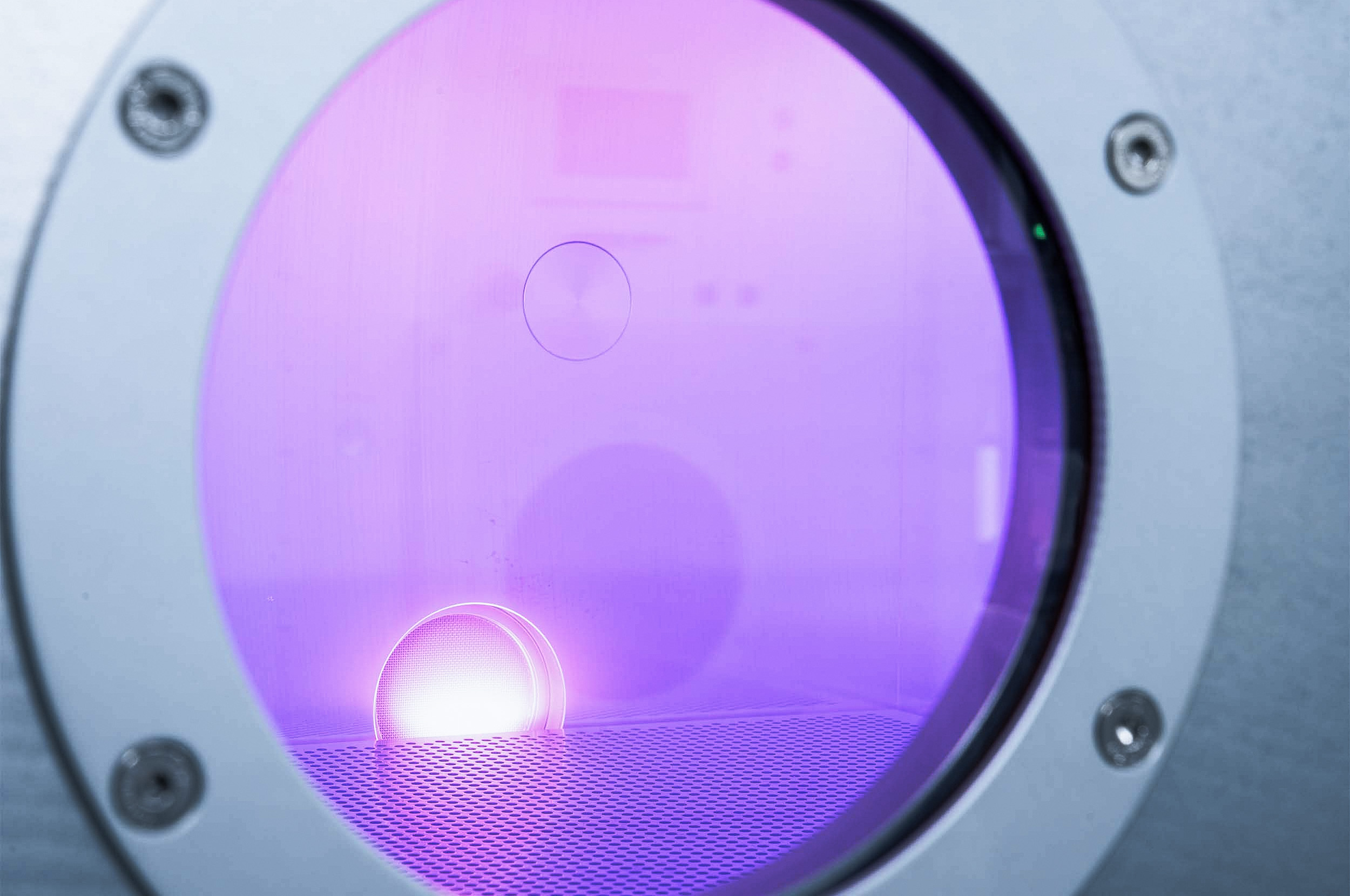
270l chamber
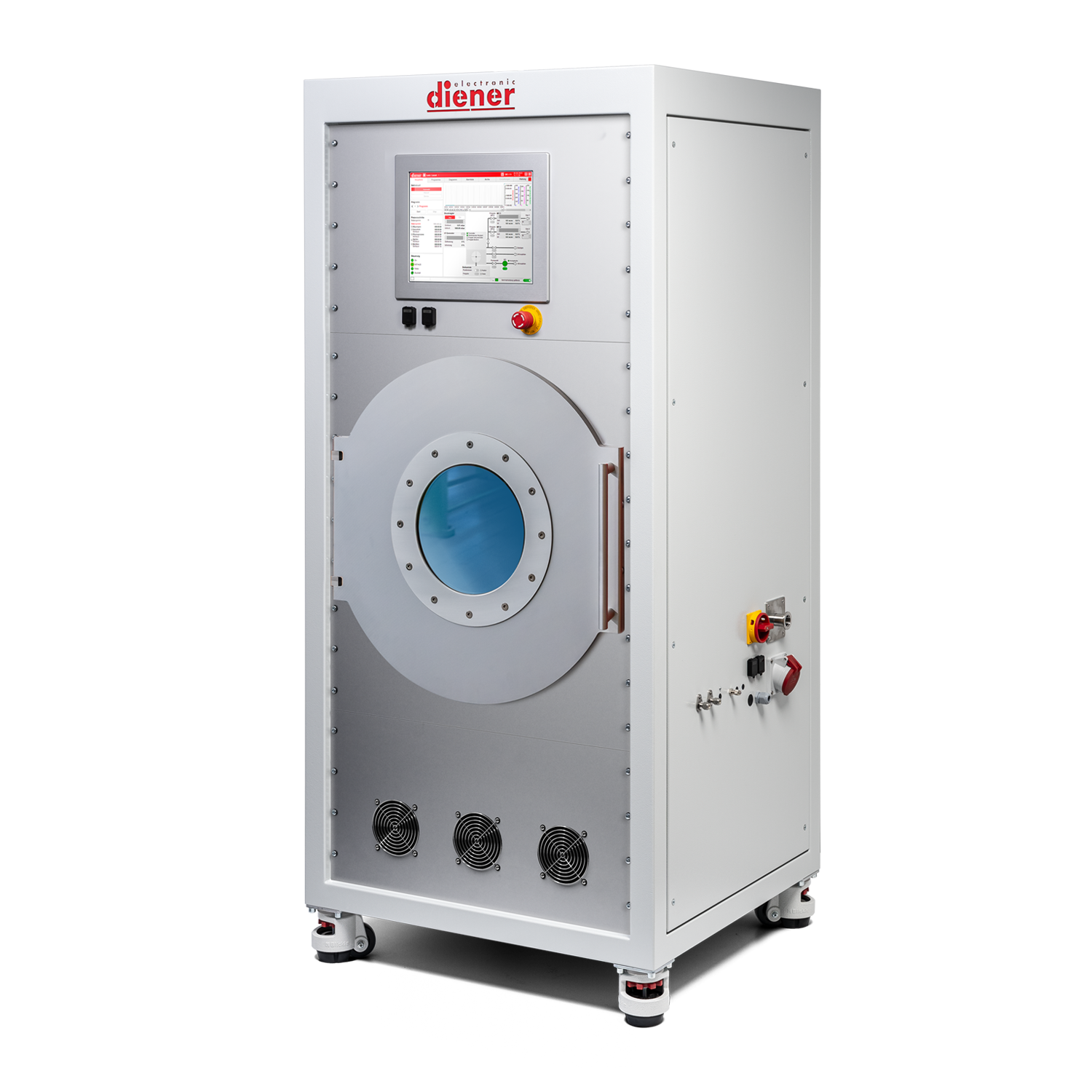
The Low-Pressure Plasma Tetra 270 system is equipped with a large chamber volume of 270 litres, which is ideally suited to large industrial components. It features a stainless steel chamber that ensures particularly safe and stable industrial processes. The generous chamber size allows for the simultaneous processing of complex or multiple components, making the Tetra 270 ideally suited to industrial production processes and series production applications. It offers maximum chamber volume within a compact modular housing and therefore integrates extremely well into existing production environments.
Electrode
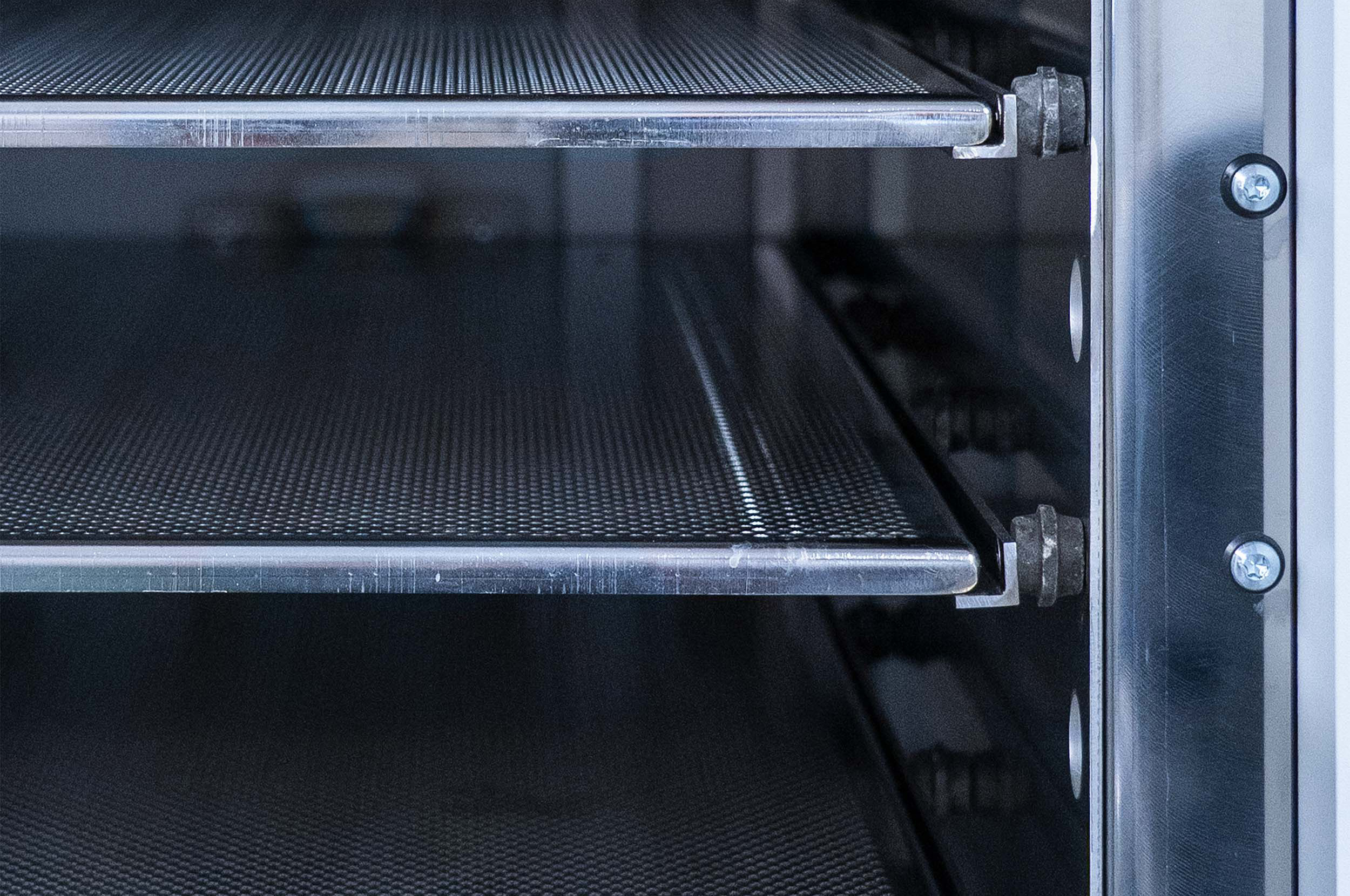
As technology advances, so do the requirements. With Diener electronic, companies benefit from a high level of investment security, as the Tetra 270 plasma system can be further developed to meet future requirements. Thanks to the flexible modular system, the choice of single-stage or multi-stage electrodes for the Tetra 270 plasma system is determined by the specific application. For complex, larger components, it is advisable to install a single electrode. For many small components arranged across several levels, multi-level electrodes or a rotary drum electrode are installed to ensure uniform treatment in every application of the Tetra 270 plasma system.
Control
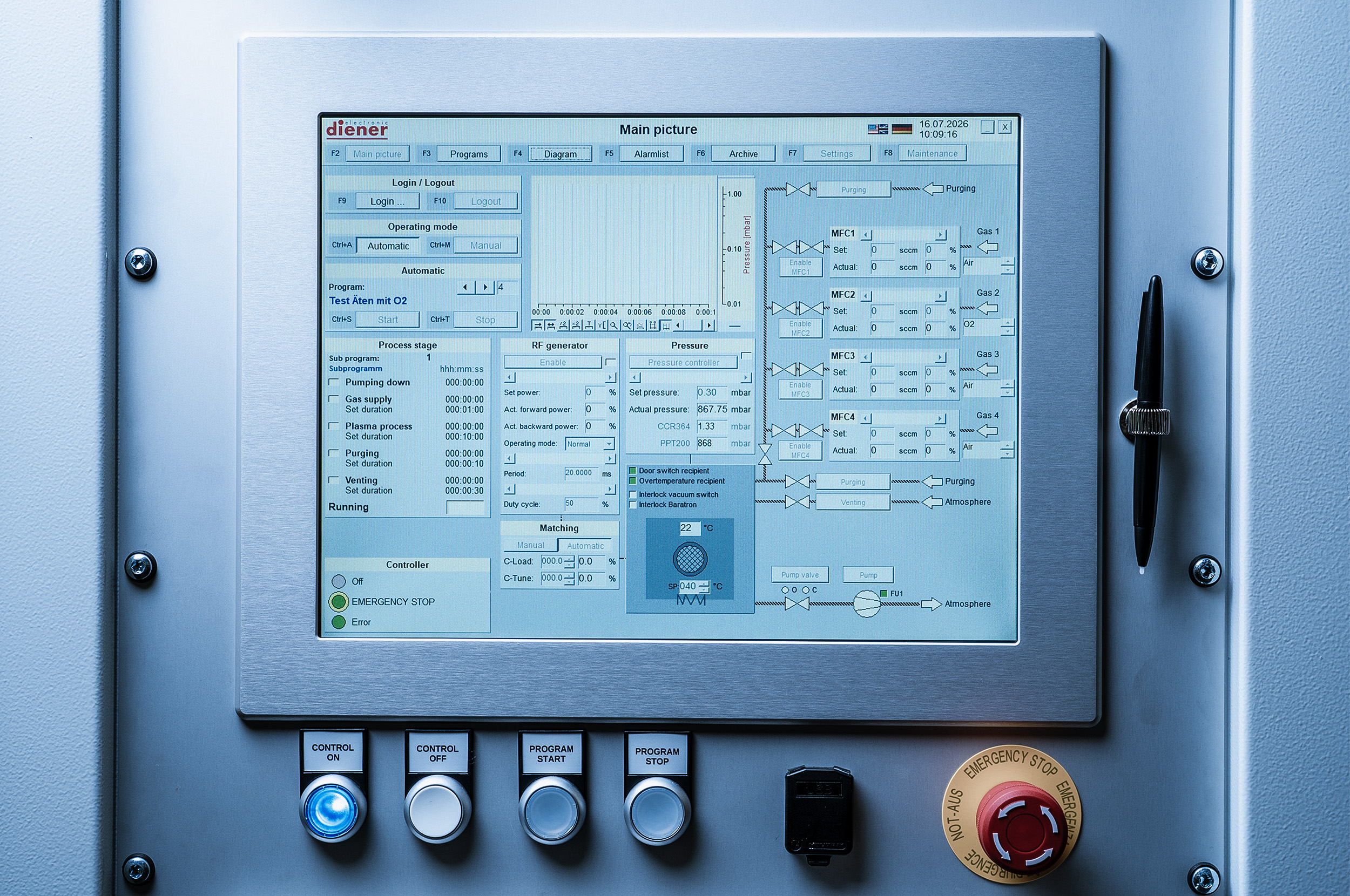
For industrial applications, the control unit is best suited to a simpler, Low Cost or basic PC control system with pre-set processes. For demanding production environments, the Tetra 270 plasma system is equipped with a full PC control system. This ensures that processes and alarm lists can be archived, and that remote diagnostics and network connectivity are provided. Process transparency and traceability form the basis for efficient and cost-effective production with the Tetra 270 plasma system.
Technical data
Housing dimensions
Standalone
Control unit
Low Cost PC (Windows CE)
Basic PC (Windows CE)
Full PC (Windows 11 IoT Enterprise)
Vacuum chamber
Stainless steel, Hinged door
W 600 mm x H 600 mm x D 750 mm; Volume approx. 270 liters
Generator
80.00 kHz | Power output 0 - 1000 W
80.00 kHz | Power output 0 - 3000 W
13.56 MHz | Power output 0 - 300 W
13.56 MHz | Power output 0 - 600 W
13.56 MHz | Power output 0 - 1000 W
2.45 GHz | Power output 0 - 850 W
Gas supply
MFC (Mass flow controller)
Electrode
Single-tier electrode
Multi-tier electrode
RIE electrode
Pressure measurement
Pirani sensor
Capacity pressure gauge
Power supply
400 V | 16 - 125 A
Technical changes reserved.
Get a custom quote for Low-Pressure Plasma Tetra 270?
Start an inquiryOther interesting products
FAQ Frequently Asked Questions
What are the benefits of plasma surface treatment?
Plasma surface treatment makes it possible to carry out essential processes without the use of wet chemical methods. Such a VOC-free process (Volatile Organic Compounds) offers the following major advantages:
- No need for chemical solvents
- no drying times between processes
- improved health and safety
- Enhanced environmental protection
- Uniform treatment, even in recesses and cavities
What processes can be carried out using plasma?
- Cleaning
- Activate
- Etching
- Coating
are the methods used to functionalise many surfaces with the aid of plasma pre-treatment.
What can be covered using the Tetra 270?
The Tetra 270 from Diener electronic can be used to process all vacuum-resistant materials.
Can temperature-sensitive components be processed using the Tetra 270?
Yes, as this is a cold plasma, the low-pressure plasma systems Tetra 270 from Diener electronic are suitable for temperature-sensitive components.
Can ESD-sensitive components be handled using the Tetra 270?
Yes, this is possible using low-pressure plasma of the Tetra 270. A trial can be carried out in our process department on request.
Which gases can be used with the Tetra 270?
The following gases can be used in the Tetra 270 and, more generally, in low-pressure plasma: O₂, N₂, Ar, ambient air, CO₂, H₂O vapour and forming gas
Are exhaust air filters necessary?
Yes, all systems must be connected to a proper exhaust system, regardless of the type of gas used! Nitrogen oxides, exhaust gases, fine oil mist (from oil pumps), etc. are produced, which must not be inhaled; furthermore, the gases are often acidic, meaning they promote the rusting of surrounding parts, machinery and equipment.
What is the frequency of the GHz system Tetra 270?
The generators for the GHz system Tetra 270 operate at an ISM frequency of 2.45 MHz – comparable in intensity to that of a microwave. Please enquire about the safety guidelines for people with pacemakers.
In which industries is plasma surface treatment used?
Diener electronic equipment and systems are successfully used in the following sectors:
- Optics
- Precision engineering
- Electronics
- Automotive industry
- Medical
- Aerospace
- Laboratory technology
- Plastics technology
- Textile engineering and
- Jewellery and watchmaking industry