


Atmospheric pressure plasmaPlasmaBeam PC
Industrial precision cleaning and surface activation
Available with Profinet connectivity on request – well suited to in-line production for the following processes.
Start an inquiry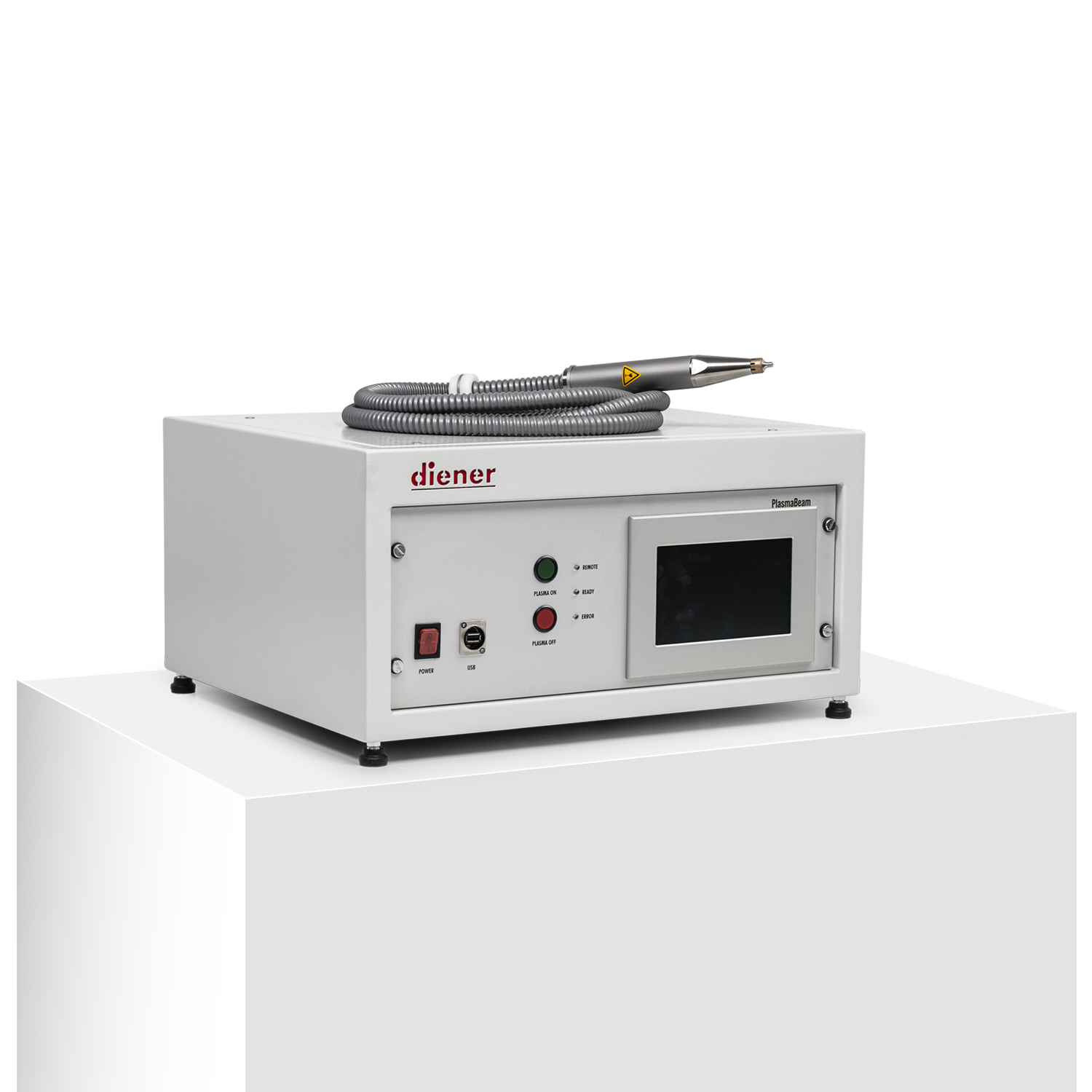
Seamlessly integrated into your in-line production
The PlasmaBeam PC plasma processor, featuring direct visualisation of plasma parameters, is used for surface cleaning and activation in many sectors, for example in: plastics engineering, the automotive industry, electrical engineering, elastomer technology, precision engineering, small-batch production, microsystems technology, medical technology, solar cell technology, research and development, as well as semiconductor technology and optics.
Thanks to the unique design of the PlasmaBeam PC from Diener electronic, the plasma system is suitable for use with robots and can be integrated into existing automated production lines. This atmospheric-pressure plasma system thus meets the highest demands of various industrial sectors and enables the archiving of process data. Profinet connectivity is available on request.

Cleaning
The Atmospheric pressure plasma system PlasmaBeam PC offers a wide range of applications for the local ultra-fine cleaning of polymers, metals, ceramics and glass. This process breaks down molecular residues of contamination.
More information
Activation
Atmospheric pressure plasma is a highly efficient process for locally improving the adhesion of various substrates prior to painting, gluing, printing or bonding. Plasma activation using the Atmospheric pressure plasma PlasmaBeam PC system creates polar bonding partners and increases the surface energy.
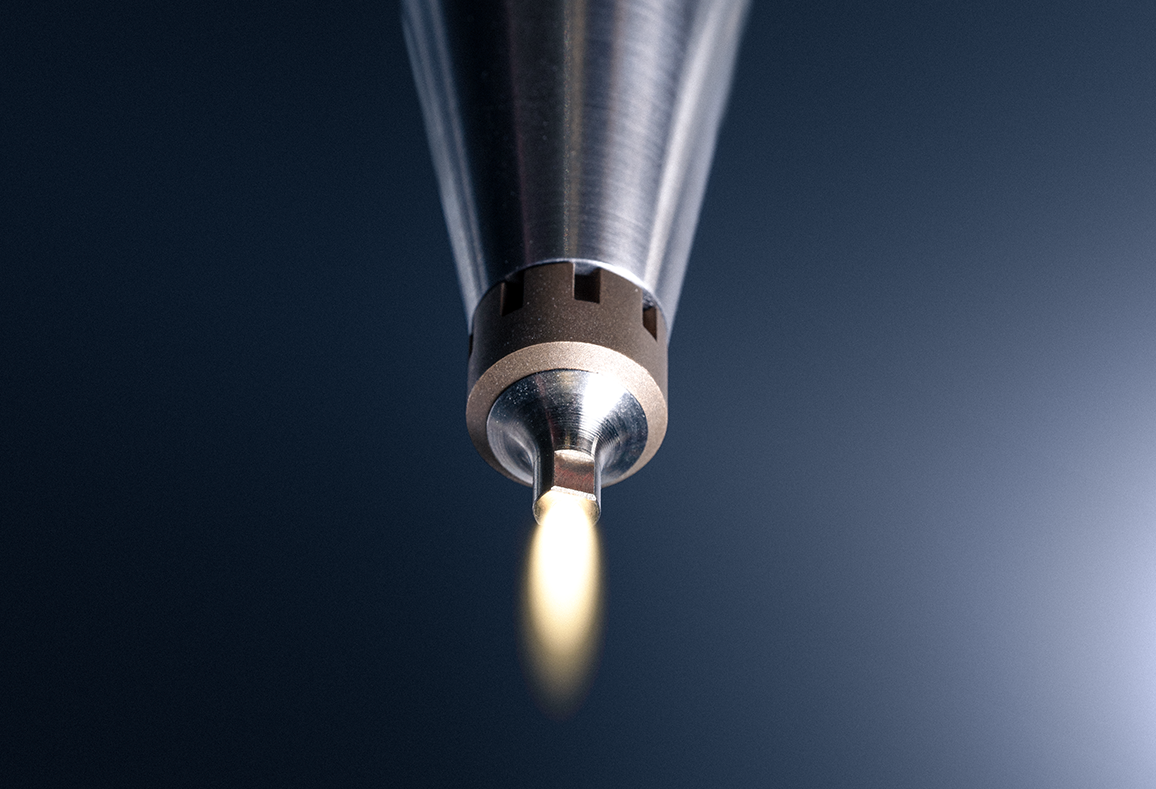
The STANDARD nozzle on the plasma generator
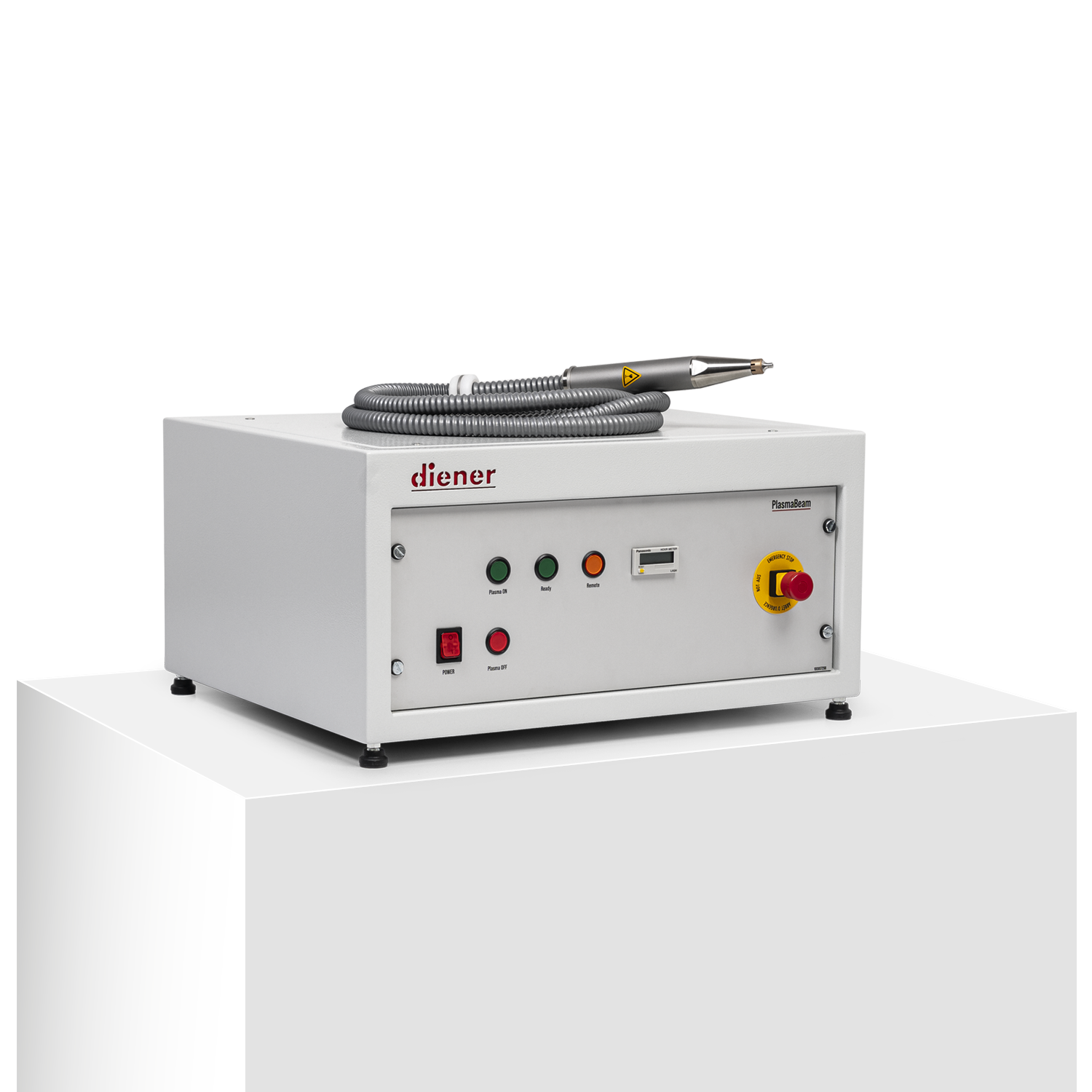
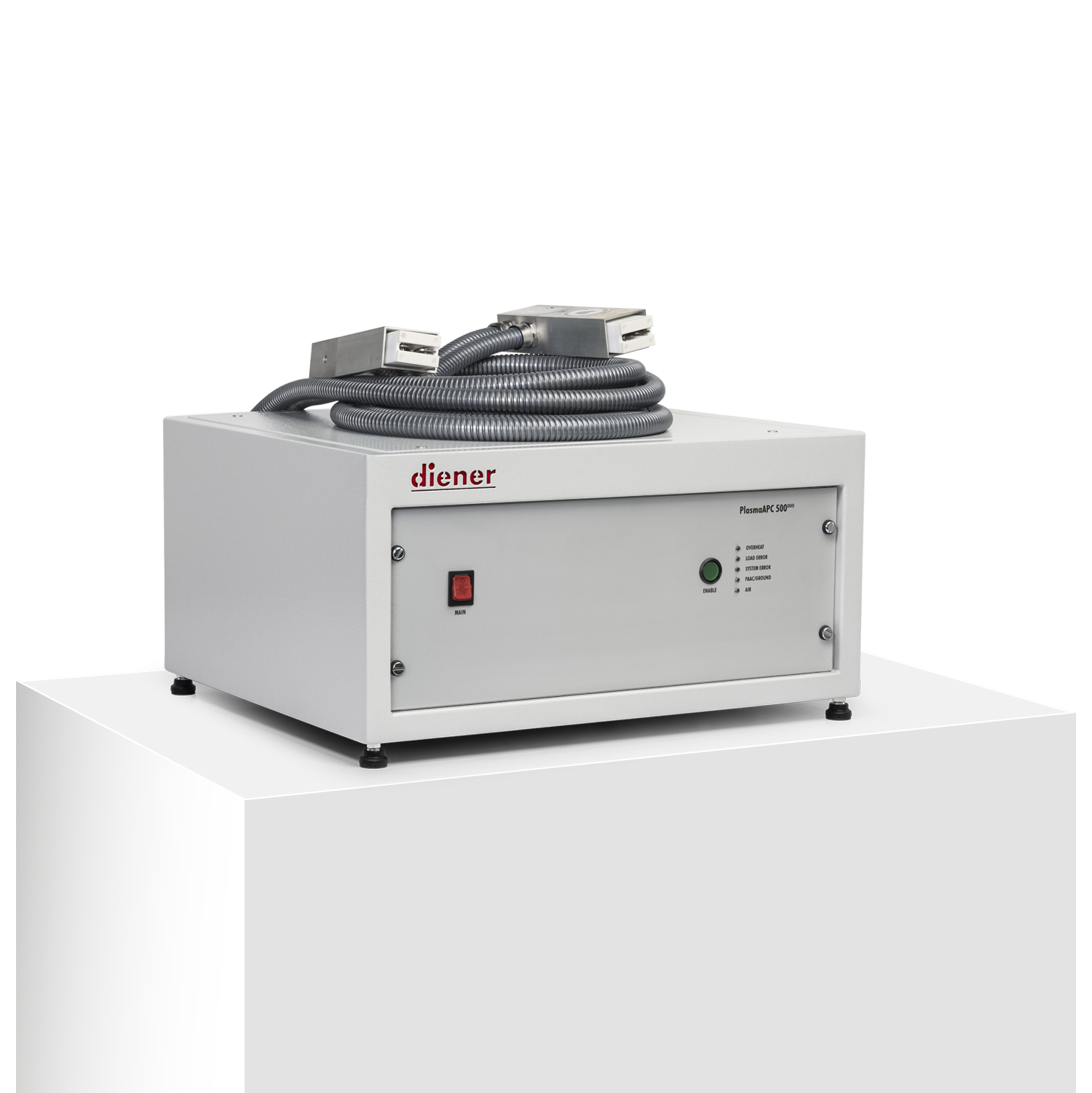
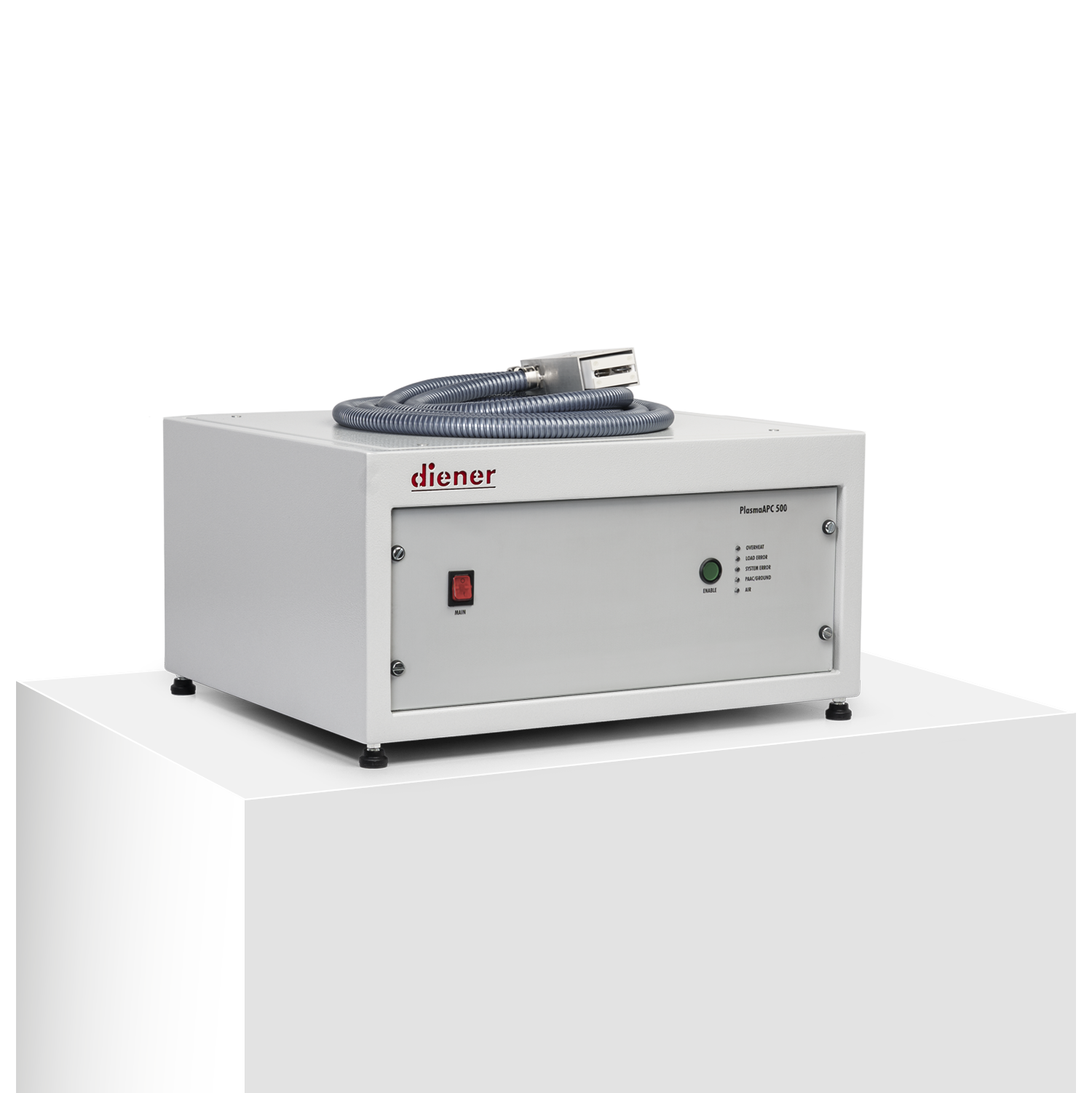
The atmospheric plasma system PlasmaBeam PC comprises the basic components: the power supply unit and the plasma generator. The plasma generator receives the high-voltage power and process gas supply from the power supply unit via a supply line. An arc discharge is initiated between the high-voltage electrodes in the plasma generator. The plasma generated is expelled via the STANDARD plasma nozzle.
The PlasmaBeam PC from Diener electronic is fitted with the standard plasma generator. The plasma nozzle achieves a treatment width of approx. 8–12 mm at high speed – ideal for activating the adhesive joint prior to bonding.
To ensure effective surface treatment with atmospheric plasma systems, it is important to note the following: the treatment must always be carried out whilst the workpiece is in motion!
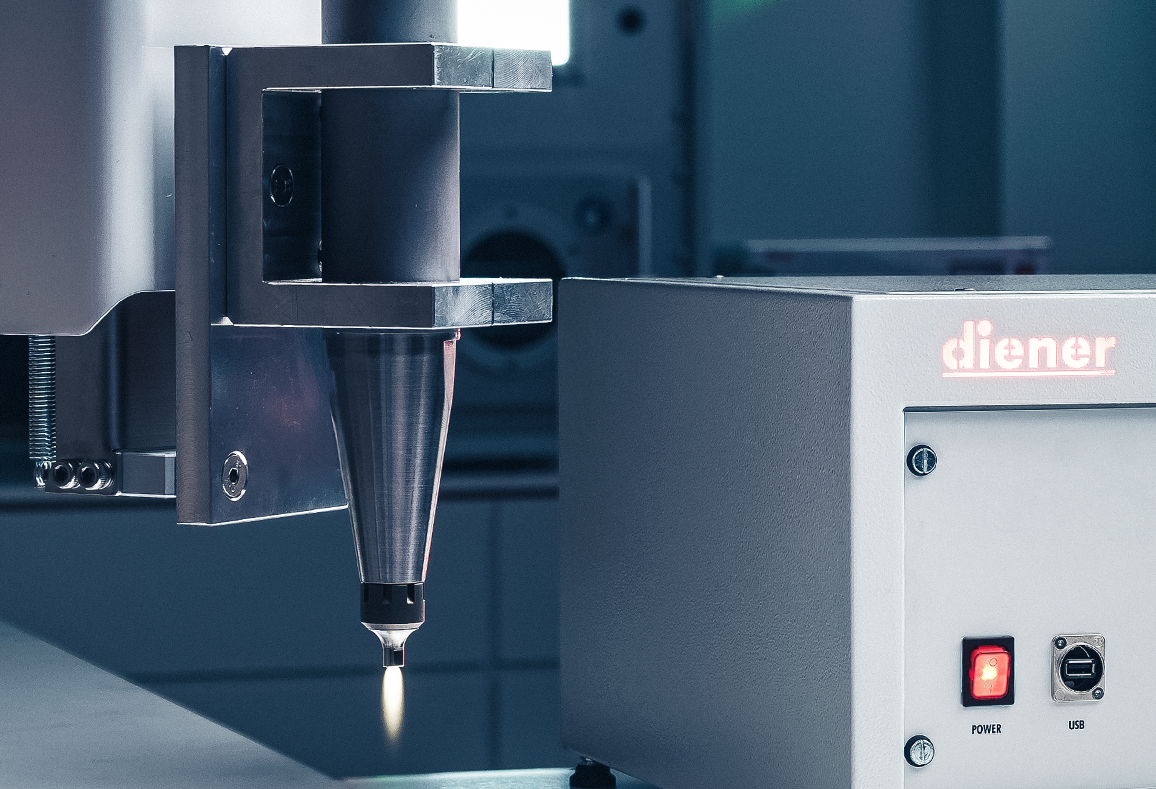
Mounting the STANDARD plasma generator
As either the workpiece being processed or the plasma generator is in motion, the plasma generator must be permanently installed. On request, Diener electronic supplies task-specific mountings for the PlasmaBeam PC to ensure the plasma generator is securely fixed in place.
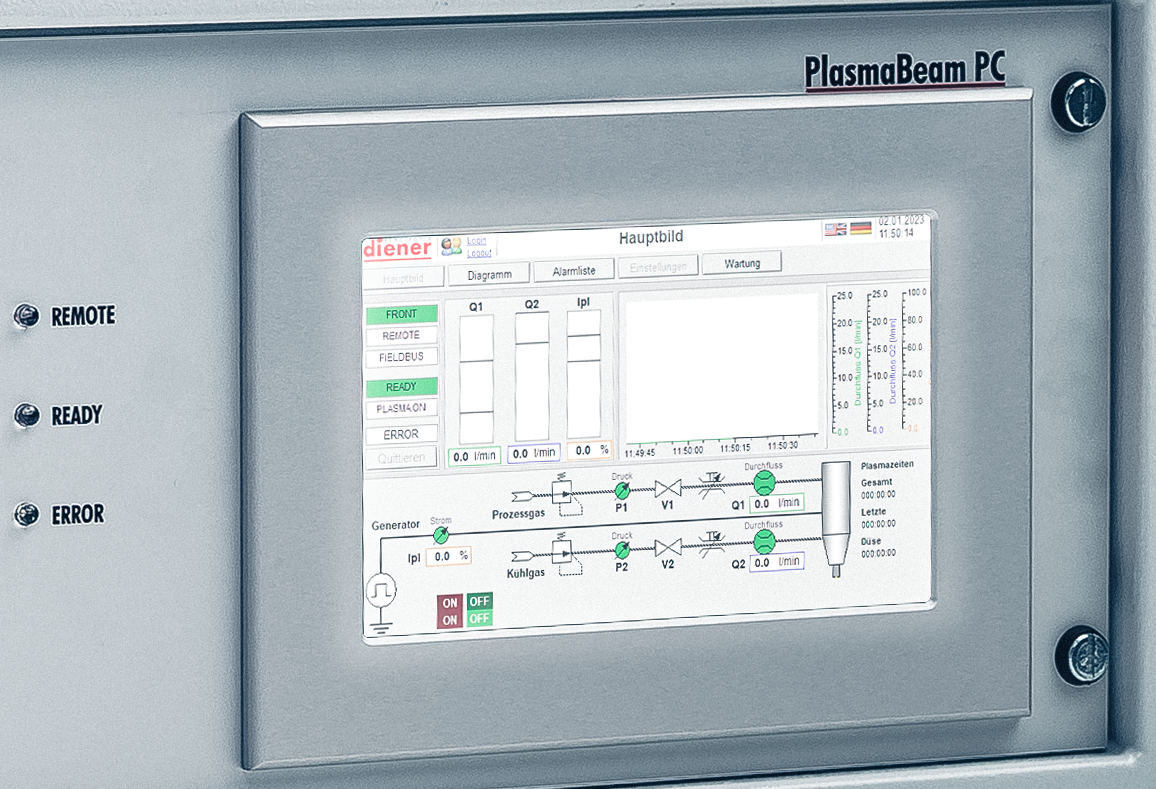
At a glance – the PC control system in the PlasmaBeam
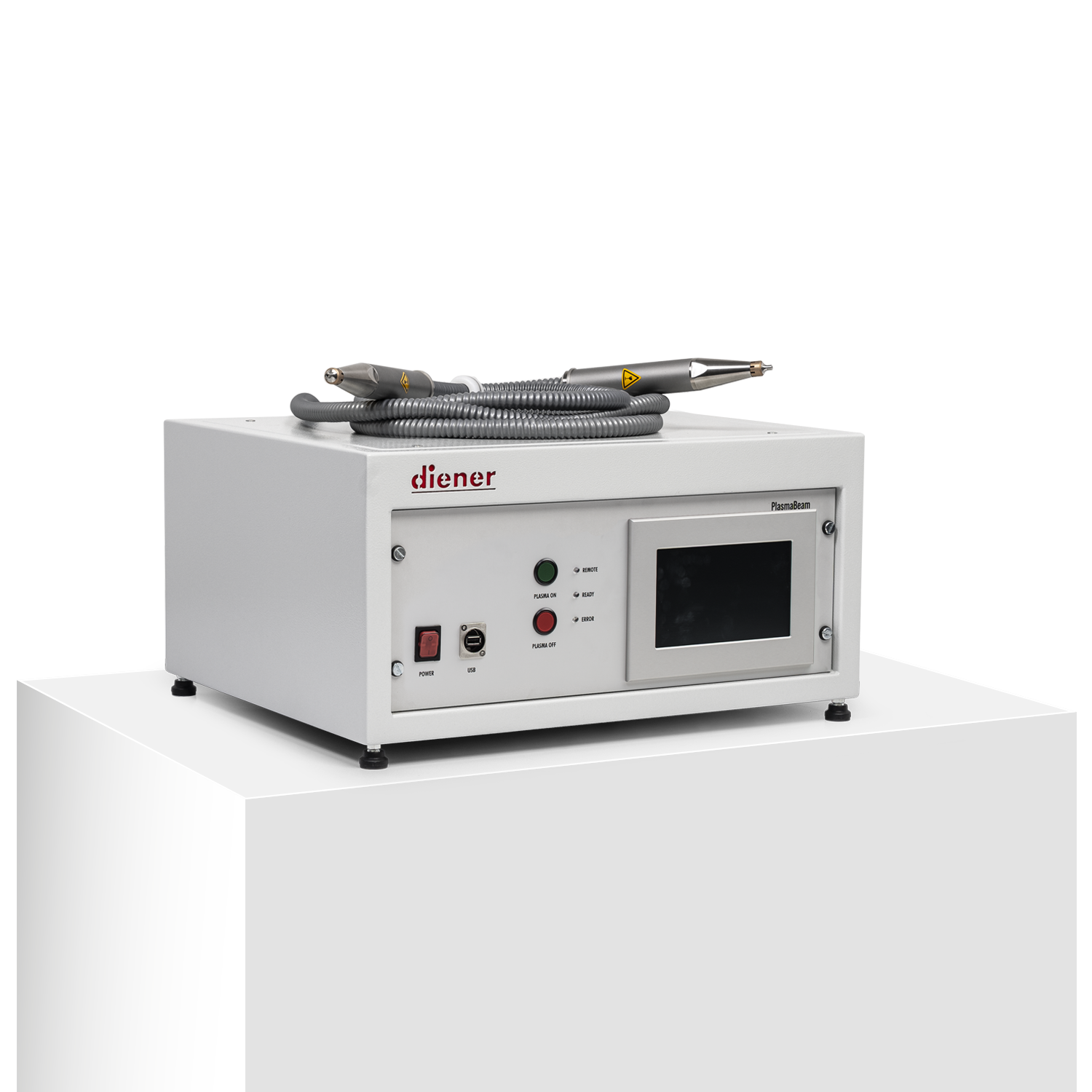
Using the PC visualisation software running on Windows CE, the PlasmaBeam PC atmospheric pressure system from Diener electronic can be controlled intuitively via a 7-inch touchscreen. All process parameters are displayed, and limit values – such as gas flow, plasma current and temperature – can be adjusted. Graphical displays and the ability to export process data round off the PC control system. Automatic process monitoring via built-in plasma current, gas pressure and gas flow controls is integrated into the unit.
On request, we offer a Profinet connection for the PlasmaBeam PC, PlasmaBeam DUO and PlasmaBeam RT models. This is the ideal way to integrate PlasmaBeam units into your in-line production and control them via a bus system.
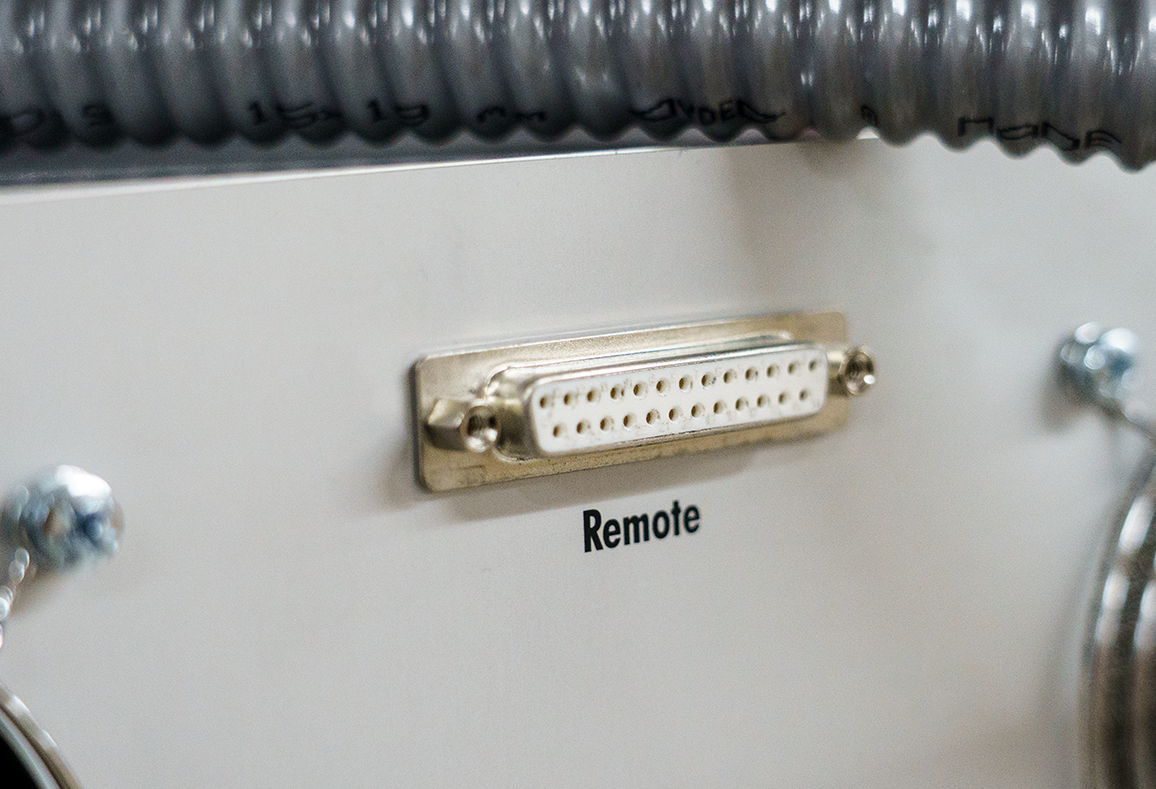
Remote connection – SUB-D connector
The PlasmaBeam PC atmospheric pressure plasma systems can be controlled via the remote connection. The external PC control unit for your production line can activate the plasma ON/OFF function and read the system status (‘Plasma ON / OFF / Ready’).
In the PlasmaBeam PC version, the remote control operates in the same way as for the PlasmaBeam PC. However, it offers the added benefit of error message transmission.
For all versions of the PlasmaBeam with PC control, a Profinet connection is available on request. Please do get in touch. We at Diener electronic would be happy to advise you on the automation of surface treatment processes.
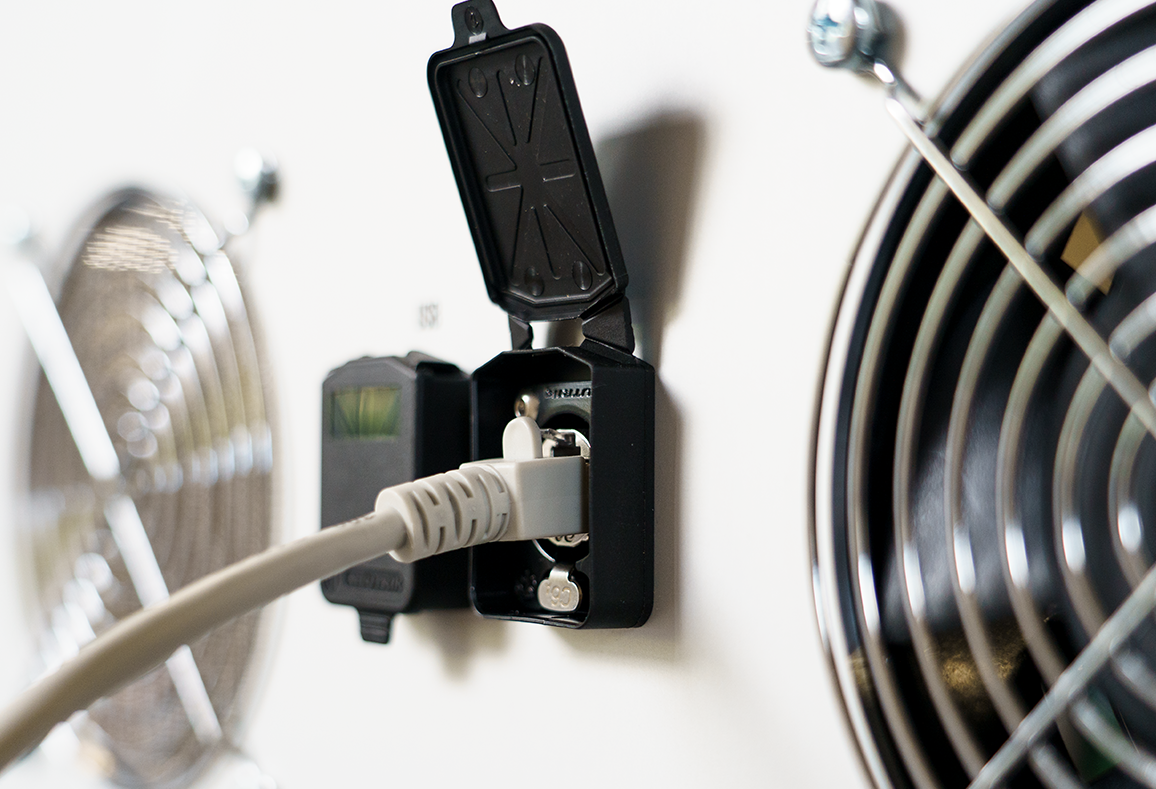
With Profinet connectivity on request
Seamlessly integrated into the BUS system of your in-line production line thanks to the Profinet connection. This enables the system control unit of your in-line production line to precisely control the PlasmaBeam PC from Diener electronic. The current process data is displayed and the system status is transmitted quickly. Your system integrator programmes the plasma flame ON/OFF function into the control system of the entire plant, thereby triggering the plasma.
On request, we offer the Profinet connection for the PlasmaBeam PC, DUO PC and RT models, as well as for many vacuum and low-pressure plasma systems.
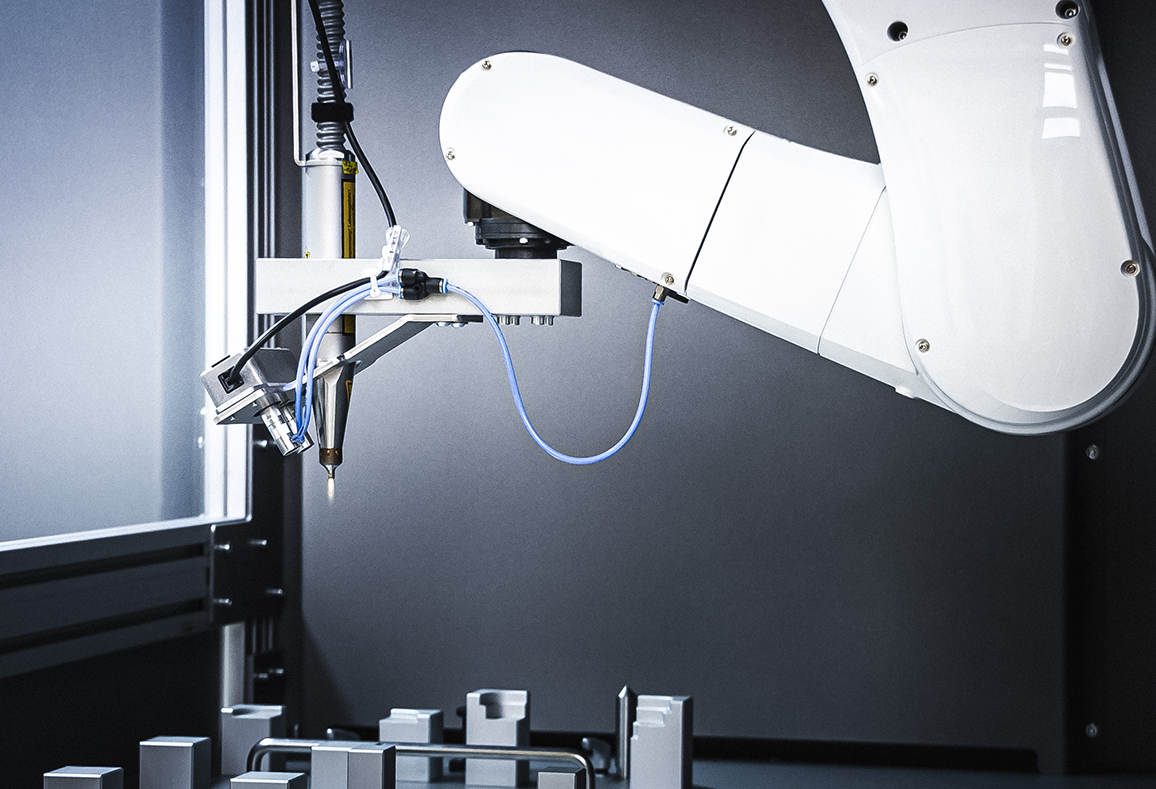
Industry 4.0
Specialised equipment and systems from Diener electronic can be integrated into Industry 4.0 manufacturing. Together with our automation partners, we develop solutions for your specific in-line tasks
, whether for atmospheric-pressure or low-pressure plasma. The atmospheric-pressure plasma generator, for example, can be guided by robots. And thanks to selective treatment, it achieves highly efficient operation.
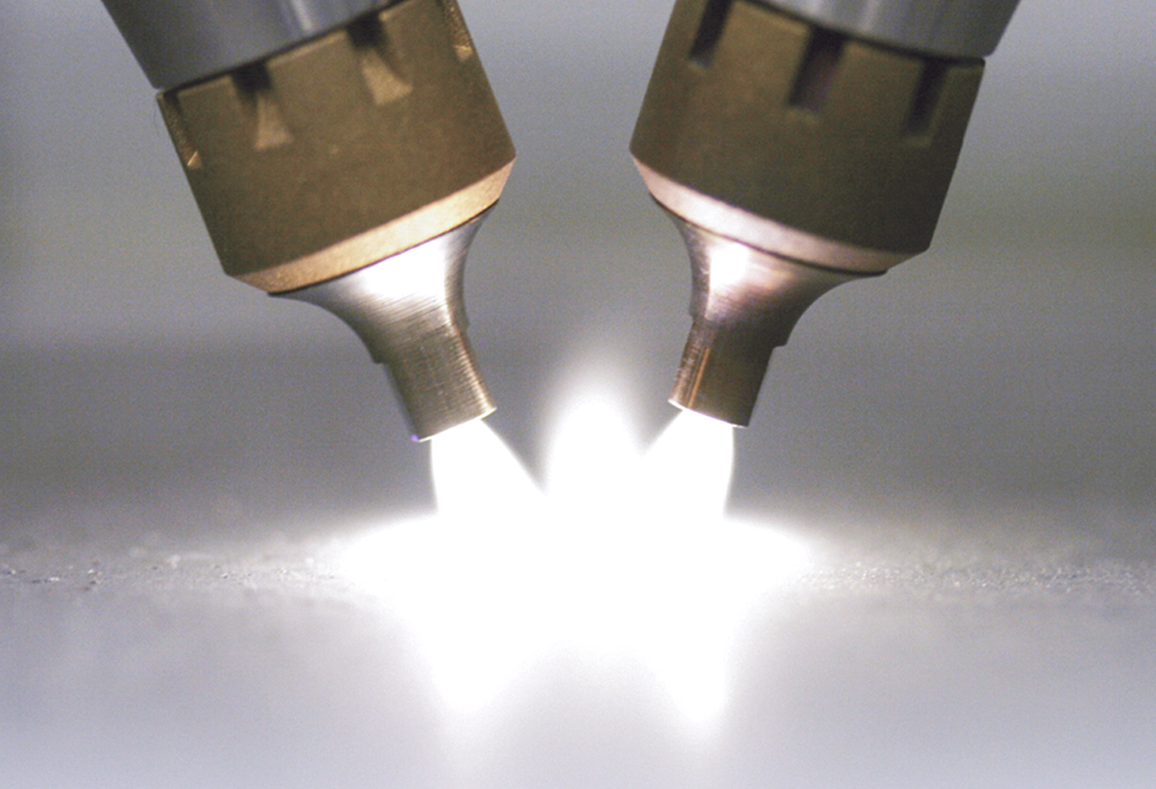
Targeted, partial surface activation using PlasmaBeam
Atmospheric-pressure plasma is a technical plasma that is excited at normal ambient pressure. The process gas is usually purified, dry compressed air, although pure oxygen or nitrogen may also be used. Excitation is achieved via a high-voltage gas discharge. Due to the short mean free path of the particles at atmospheric pressure, the plasma is spatially confined.
Consequently, the atmospheric pressure plasma in the PlasmaBeam PC from Diener electronic is always partial, enabling targeted activation of the surface exactly where it is required.

Free from Volatile Organic Compounds
Plasma surface treatment is the key approach to VOC-free (Volatile Organic Compounds) manufacturing. It enables the functionalisation of components without the use of wet chemical processes such as solvents or primers. The environmentally harmful use of chemicals, rinse water and drying times is virtually eliminated, thereby conserving resources. Thanks to the process stability, the scrap rate can be reduced, thus also contributing to the principle of sustainability.
Technical data
Housing dimensions
Tabletop
Control unit
Manual control
Semi-automatic control
Process visualisation software on a PC
Profinet connection
Dimensions Plasma nozzle
⌀ 32 mm xD 210 mm
Weight: 1.0 kg
Cable length: 3 m
Treatment width
approx. 8 - 12 mm
Process and cooling gas
Dry, oil-free compressed air
Inlet pressure: 5 - 8 bar
Gas consumption: 2 m³/h
Generator
40.00 kHz | Power output 300 W
Gas supply
6 mm quick-connect bulkhead fitting
Power supply
230 V | 16 A
Technical changes reserved.
Get a custom quote for Atmospheric pressure plasma PlasmaBeam PC?
Start an inquiryOther interesting products
FAQ Frequently Asked Questions
What are the main benefits of activation using atmospheric pressure plasma?
PlasmaBeam technology is suitable for in-line processes, e.g. plasma activation of continuous rubber profiles and hoses prior to printing, bonding, flocking or coating.
This technology is suitable for use with robots, i.e. the 2- or 3-dimensional surfaces can be scanned with the plasma beam using robots.
PlasmaBeam enables localised surface activation without the need for masking – the remaining surface areas are not affected.
What is the treatment range for the PlasmaBeam PC systems?
The treatment width for the PlasmaBeam PC systems from Diener electronic is between approx. 8–12 mm per nozzle. However, the cleaning width must be checked in advance for each application (e.g. by measuring the contact angle). When using pure oxygen (O₂) or nitrogen (N₂), the treatment width is slightly increased.
What is the recommended distance between the nozzle and the surface for the PlasmaBeam PC system?
When installing the PlasmaBeam PC, we recommend that you do not exceed a distance of 12 mm when using compressed air. The optimum speed is in the range of approximately 5–7 mm, but may vary depending on the distance.
What processing speeds are possible with the PlasmaBeam PC?
The machining speeds for the PlasmaBeam PC range from approx. 10–20 mm/s (for metals) up to several metres per second (for folding carton processing). Speeds of approximately 150–400 mm/s are often used.
Does the PlasmaBeam PC produce any exhaust fumes?
Yes, in this PlasmaBeam PC, the plasma is generated using compressed air or nitrogen in an electrical discharge. This primarily releases nitrogen oxides (NO and NO₂). A smaller quantity of carbon-containing exhaust gases is, of course, also possible (CO₂, CO). The system must be equipped with an effective exhaust air system!
Which materials can be activated using the PlasmaBeam PC?
Virtually all solid materials, with the exception of thin polymer films and fluorinated polymers, can be electronically activated using Diener electronic’s PlasmaBeam PC.
Which gases are typically used in the PlasmaBeam PC?
Compressed air is the most cost-effective option. The PlasmaBeam PC system from Diener electronic can be used with pure nitrogen or even with forming gas (N₂/H₂) up to a maximum H₂ concentration of XX per cent.
Can the PlasmaBeam PC operate continuously, for example for 4–5 hours on the production line?
The PlasmaBeam PC system from Diener electronic is designed for continuous operation and often runs non-stop for several hours during production.
Is it problematic to treat electronic components using the PlasmaBeam PC?
The PlasmaBeam PC from Diener electronic operates on the so-called ‘remote plasma’ principle, and the electrical discharge does not, as a rule, come into contact with the surface at all.
How can the cleaning quality of atmospheric plasma be described in relation to the PlasmaBeam PC model?
The PlasmaBeam PC from Diener electronic can remove very thin, trace-like organic contaminants. For heavier contamination (e.g. oil stains, drops, layers of paint), we recommend pre-cleaning using other methods.
Are exhaust air filters necessary?
Yes, all systems must be connected to a proper exhaust system, regardless of the type of gas used! Nitrogen oxides, exhaust gases, fine oil mist (from oil pumps), etc. are produced, which must not be inhaled; furthermore, the gases are often acidic, meaning they promote the rusting of surrounding parts, machinery and equipment.