

Low-Pressure PlasmaPlasma system Tetra 320R
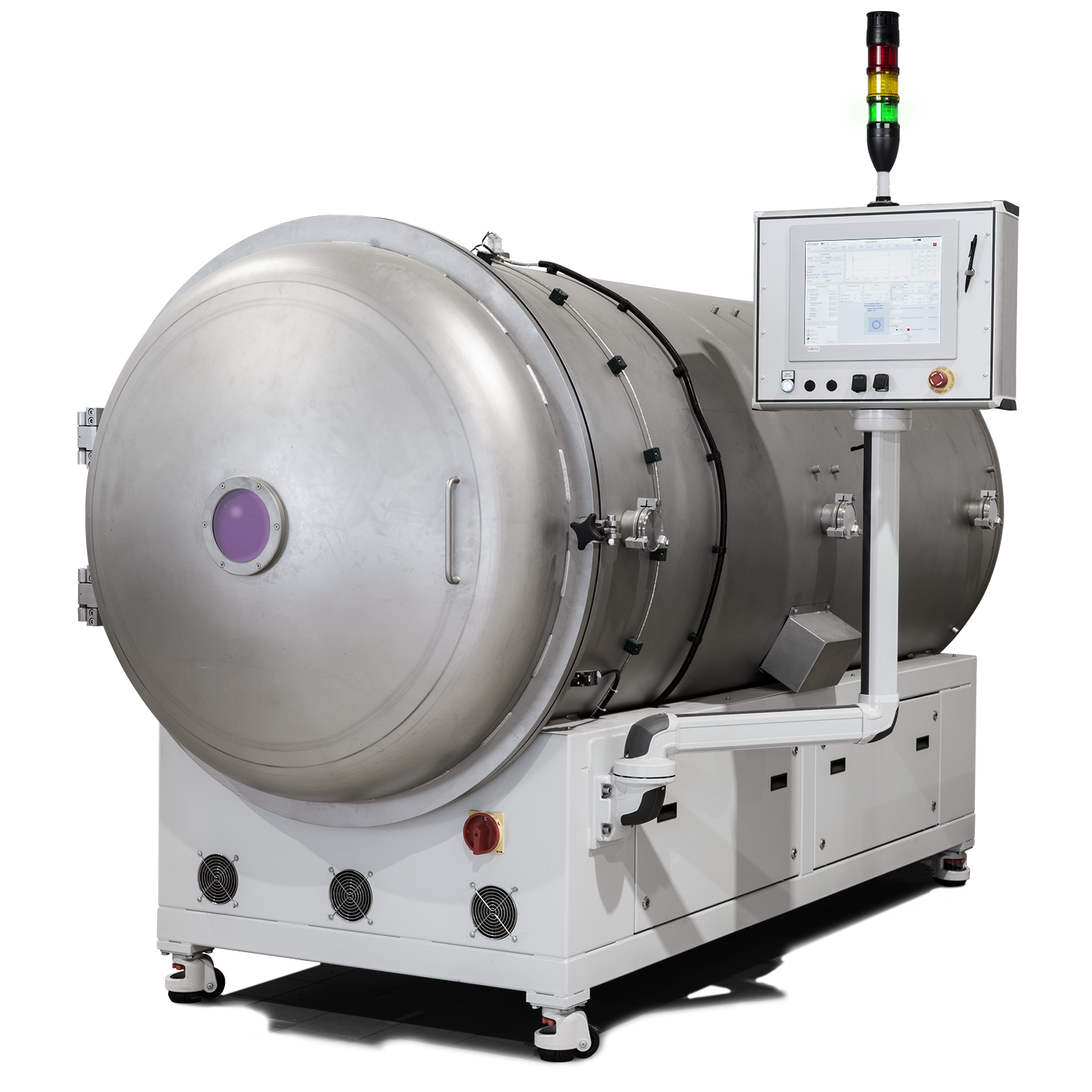
The industrial plasma system with a circular vacuum chamber
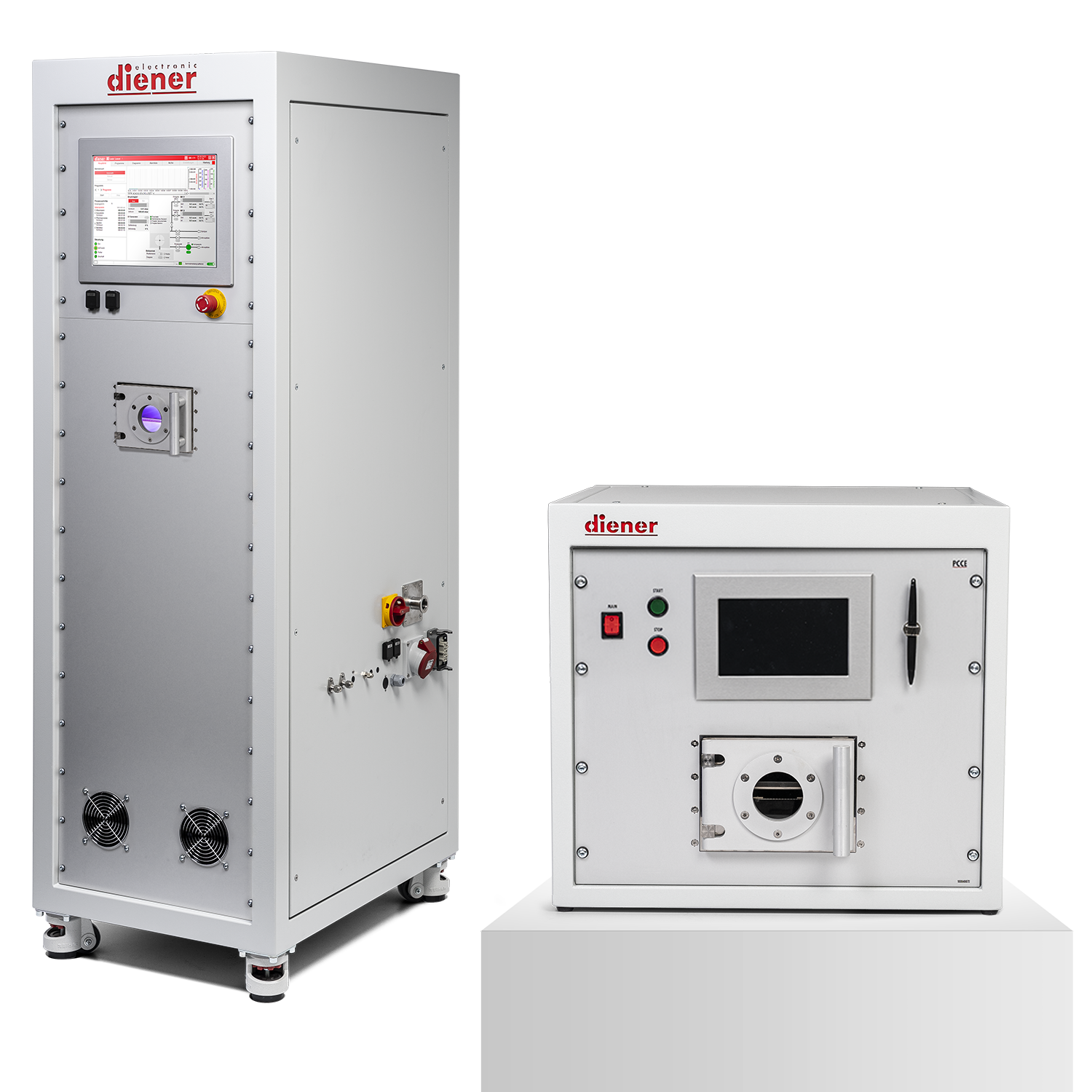
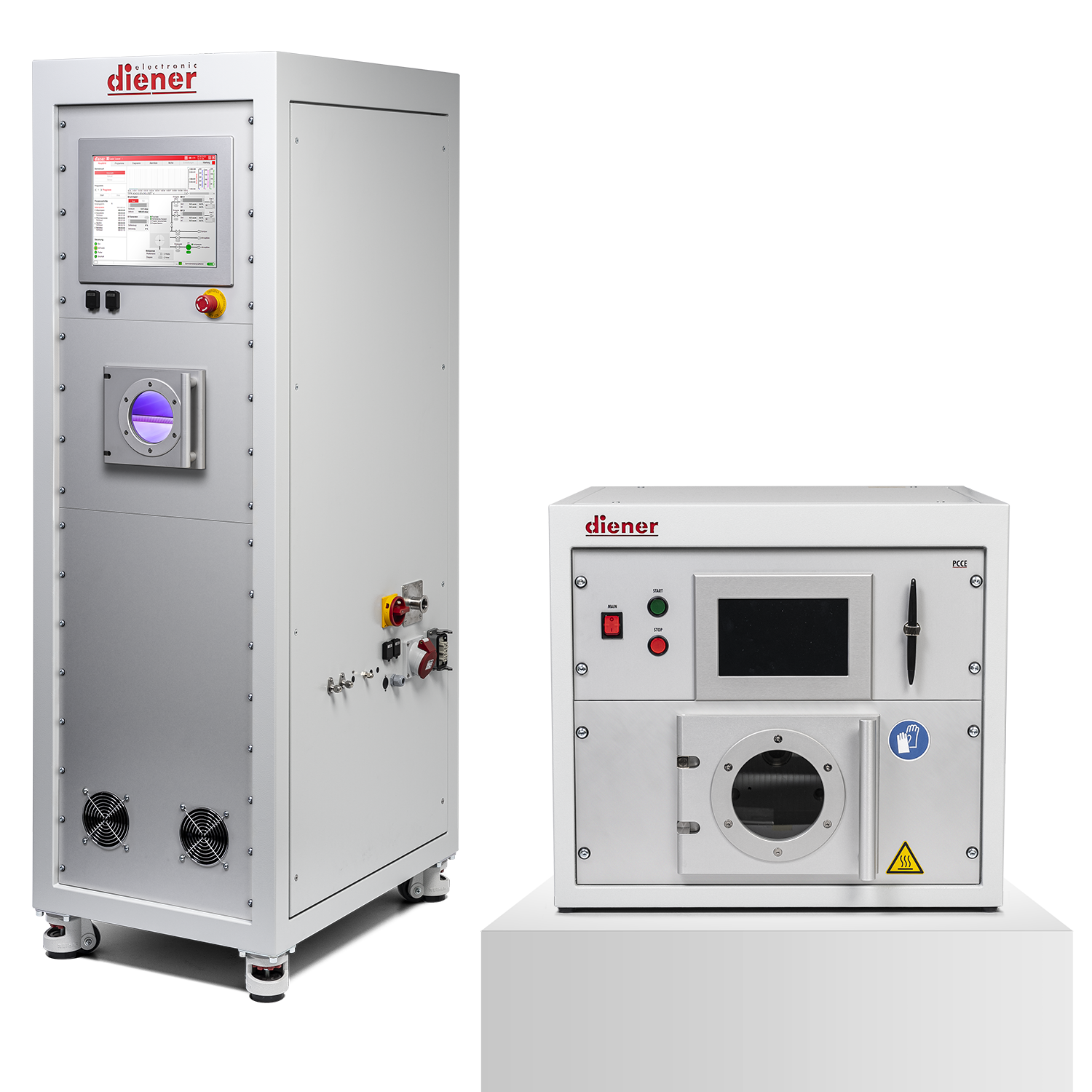
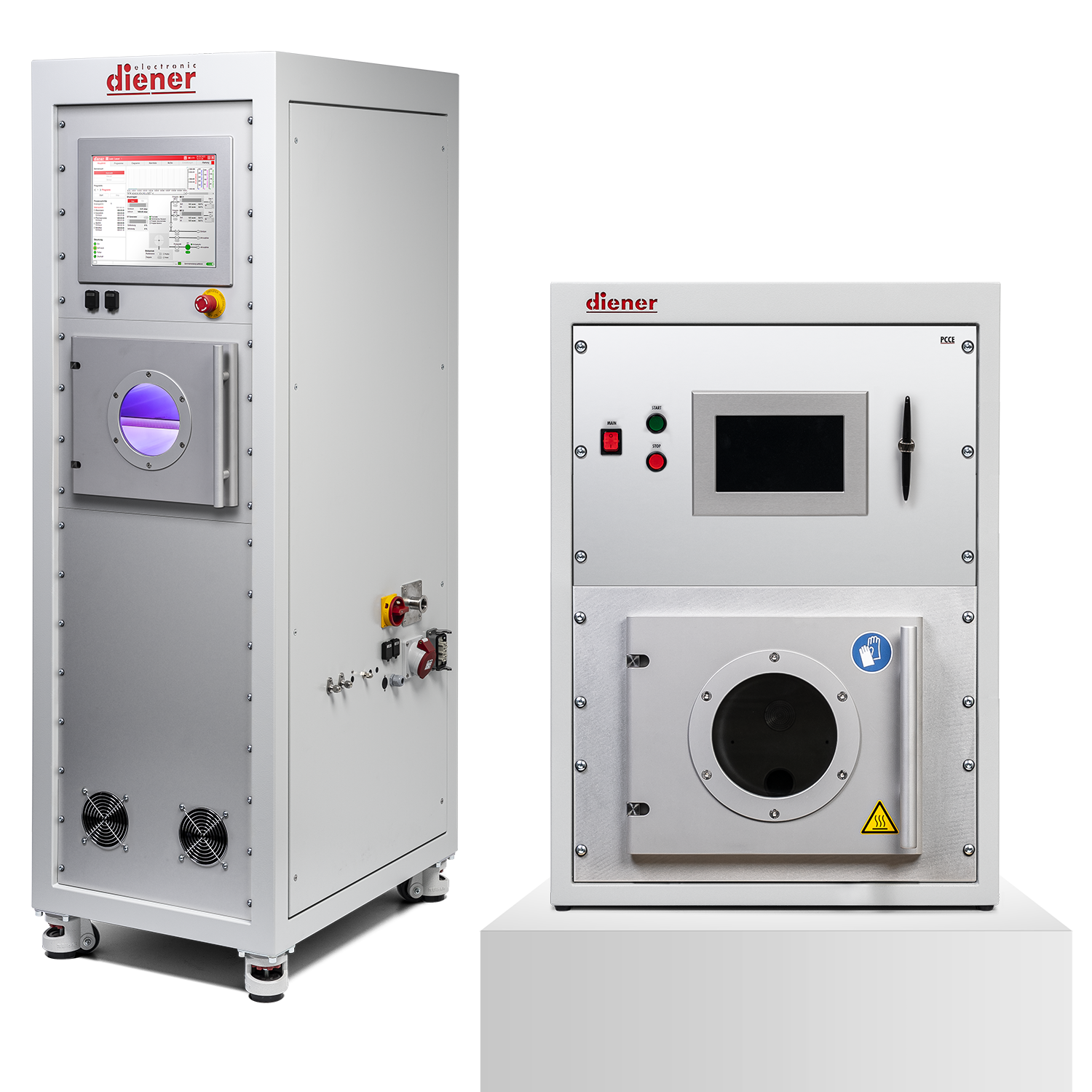
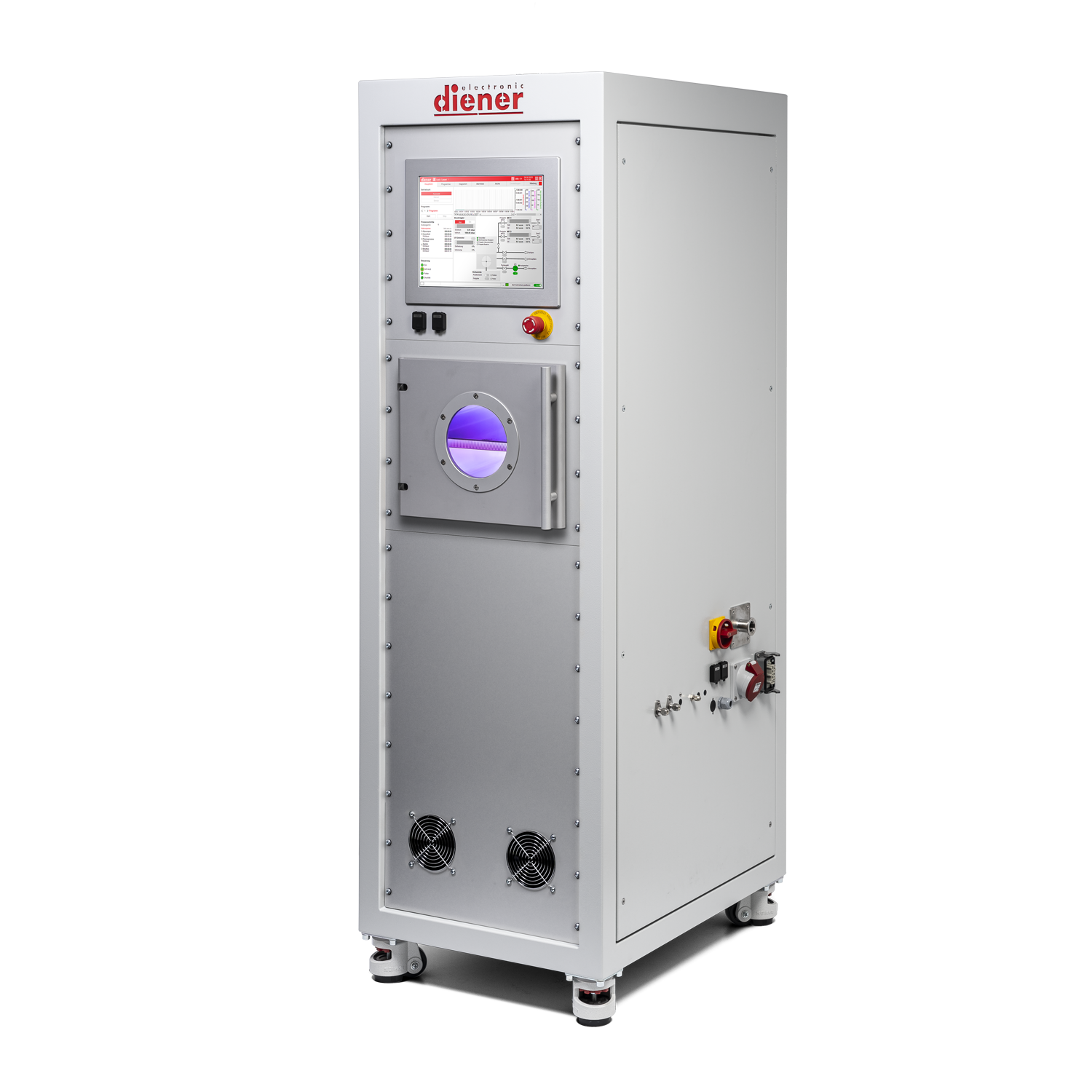
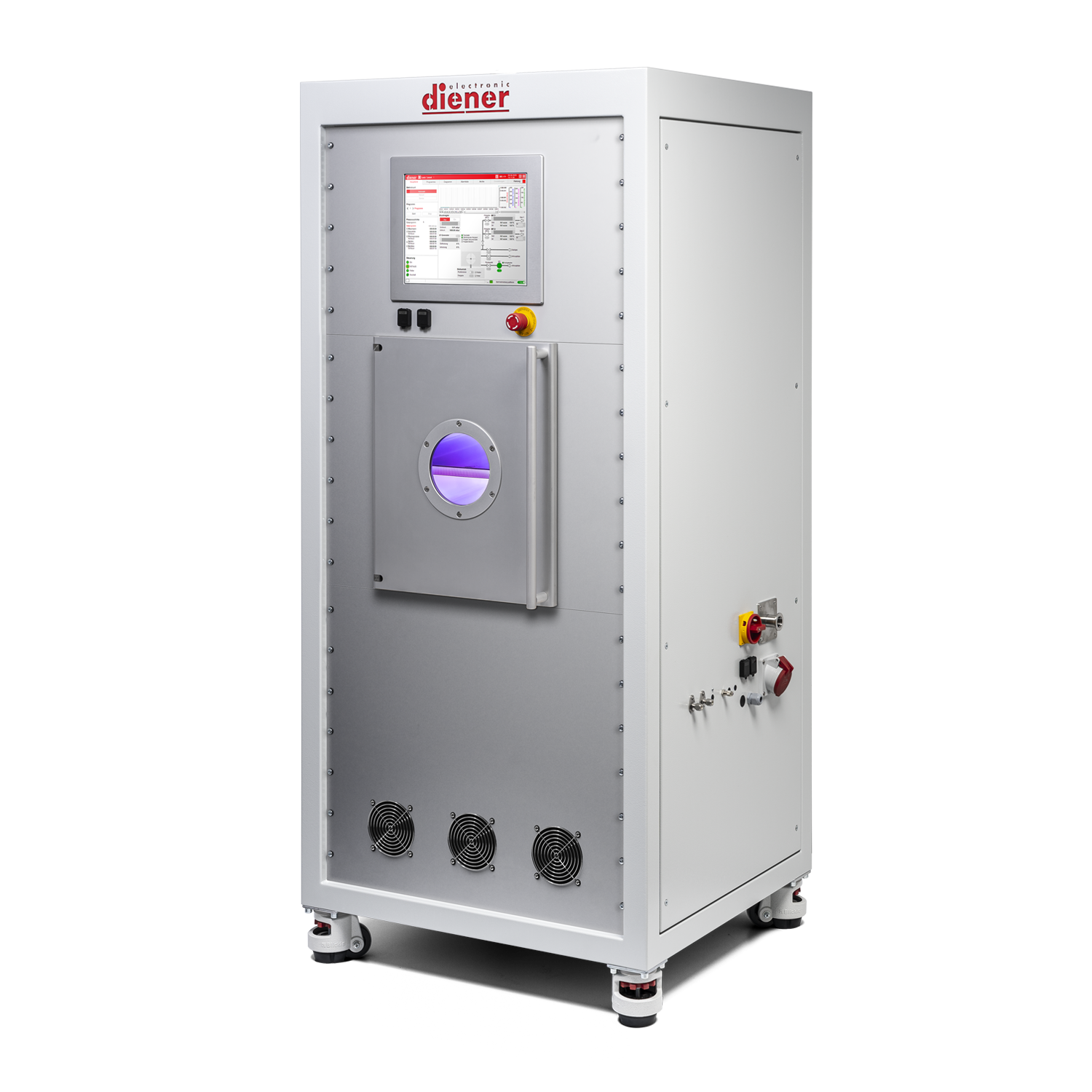
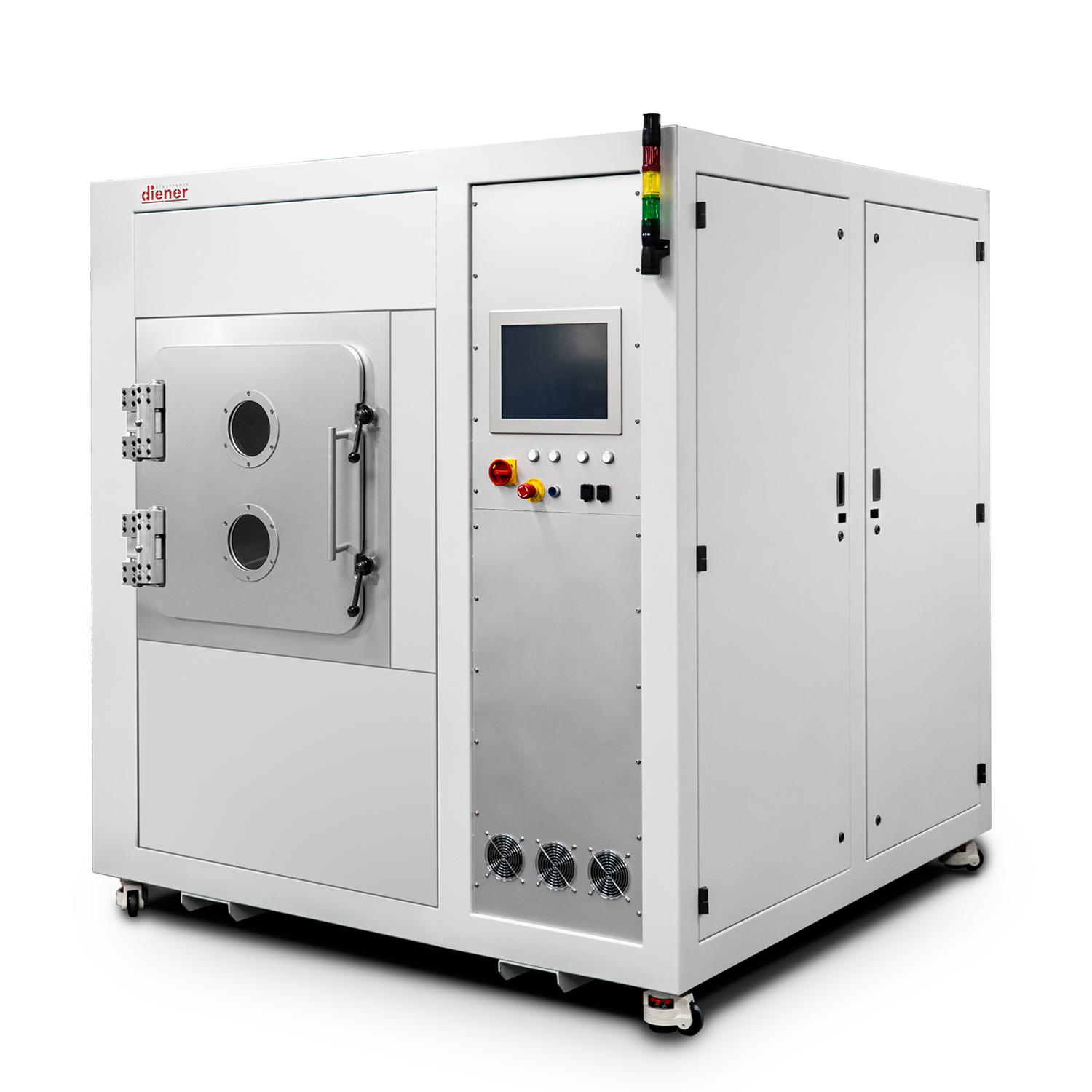
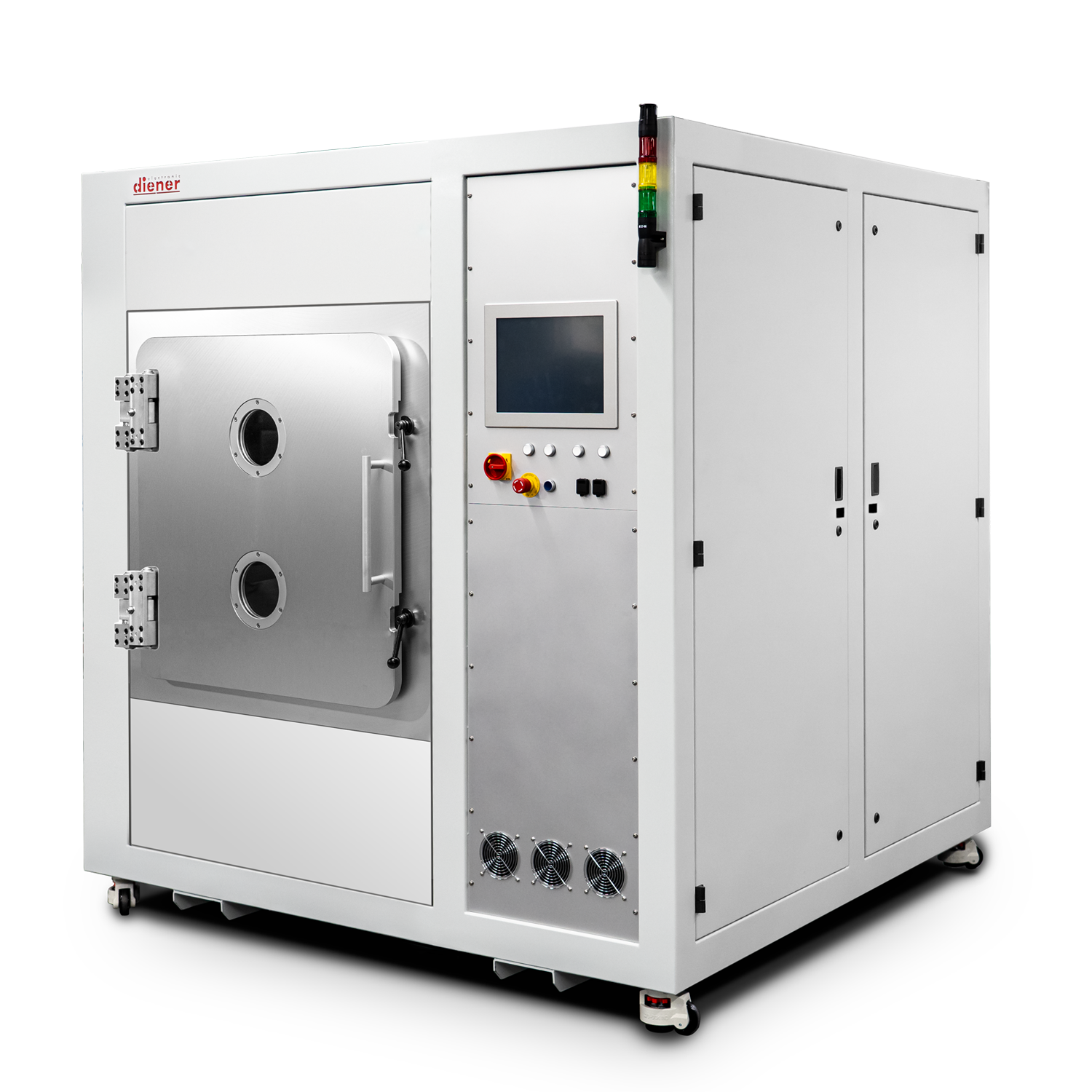
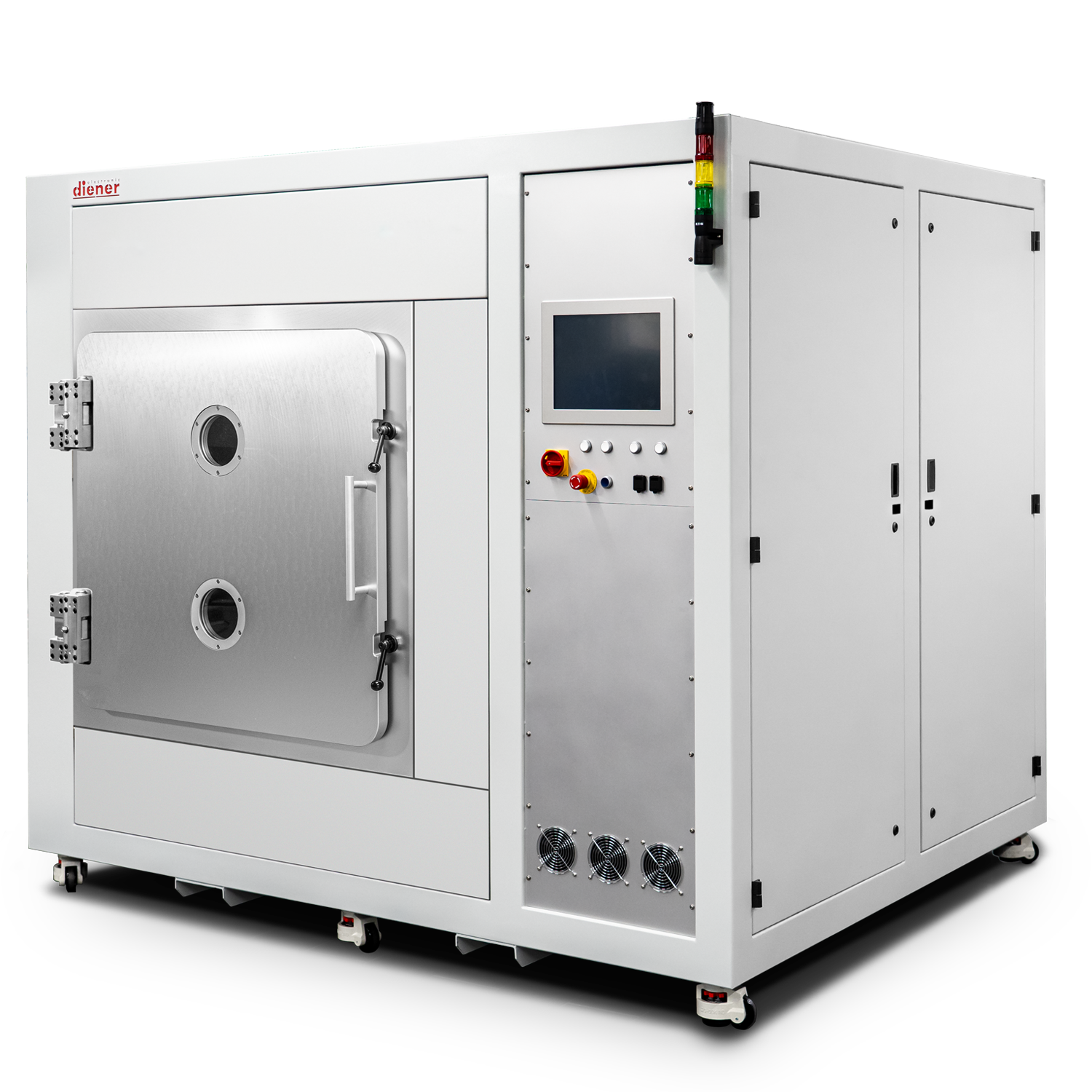
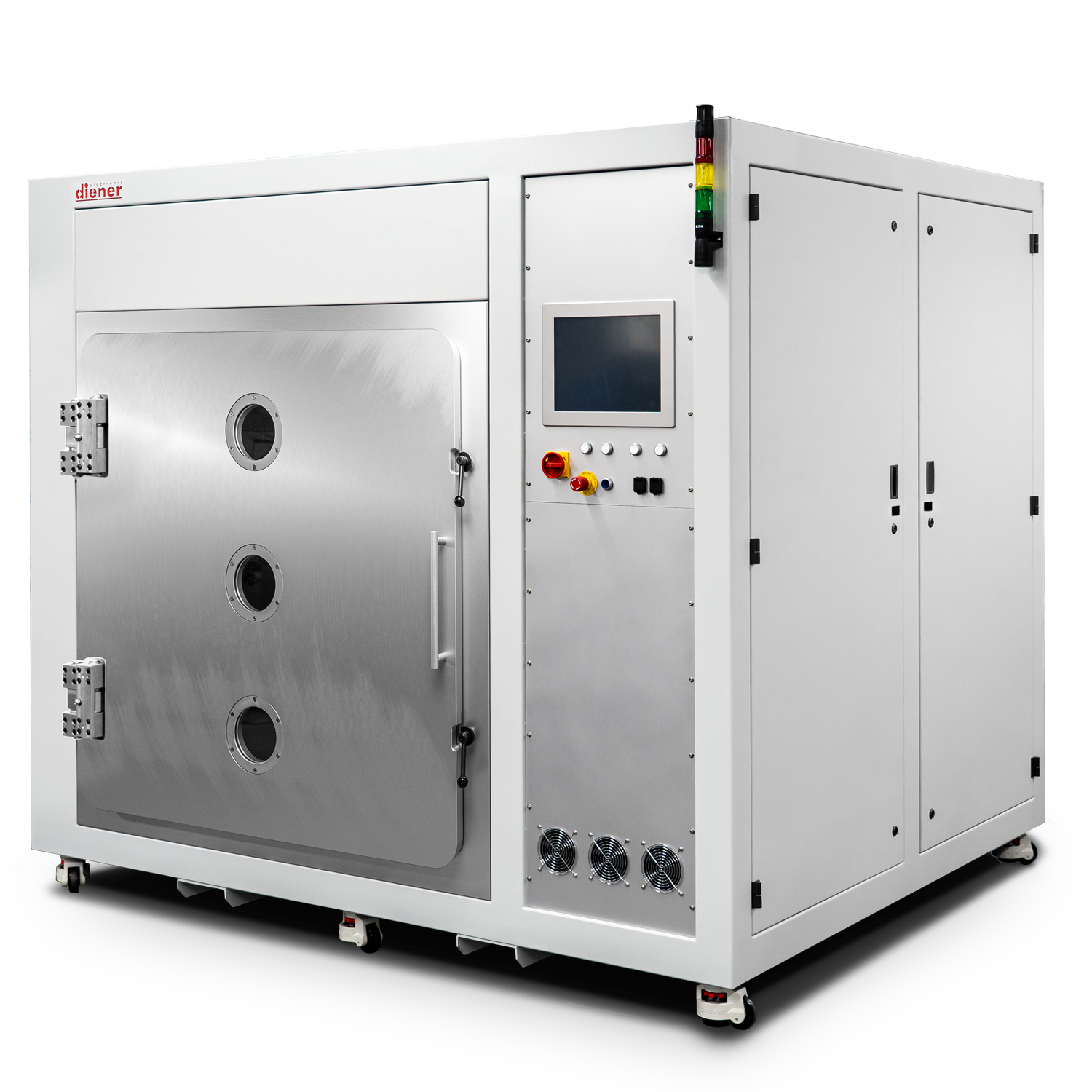
The Tetra 320R low-pressure plasma system has been developed for applications where a circular vacuum chamber offers significant advantages. With a chamber volume of 322 litres, the system is ideally suited to cylindrical, rotationally symmetrical or specially shaped workpieces.
Start an inquiry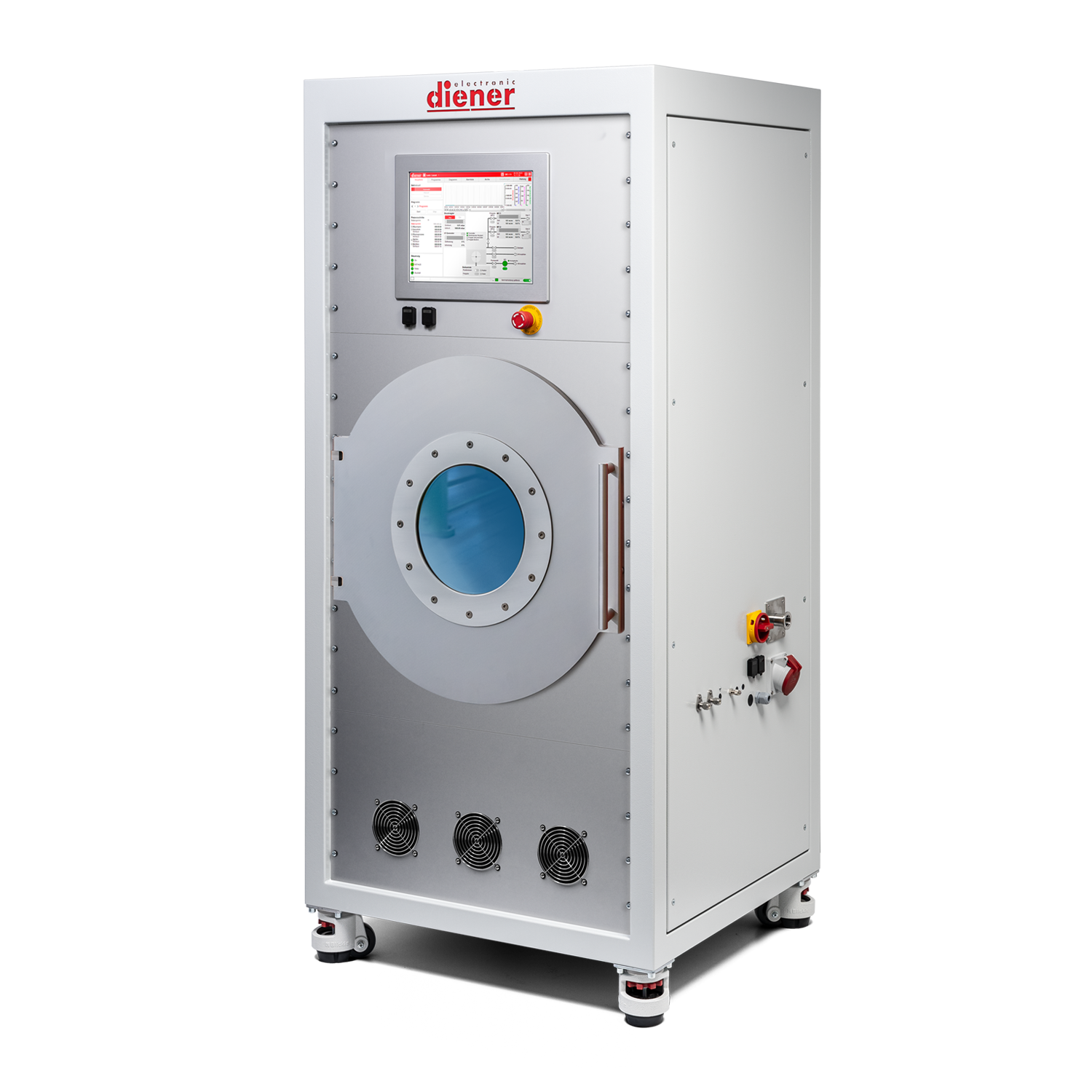
Specially developed for complex component geometries
The Tetra 320R plasma system is fitted with a circular vacuum chamber. This design is particularly suitable for workpieces that can only be processed to a limited extent in conventional rectangular process chambers. With a chamber volume of 322 litres, the system offers sufficient space for larger components and complex component geometries.
Equipped with full PC control, all process parameters can be conveniently managed. Process data can be saved, archived and documented. Via an optional MES connection, the plasma system can be integrated into existing production and quality assurance systems.
The Tetra 320R is suitable for plasmacleaning, surface activation, plasma etching and functional coating of a wide variety of materials. It helps companies to implement reproducible surface processes with a high degree of process reliability.

Cleaning
The Low-Pressure Plasma system Tetra 320R offers solutions for ultra-precise cleaning of all surfaces, for every substrate, and for every post-treatment process. Plasma cleaning removes all organic residues without subjecting the component to chemical or thermal stress.
More information
Activation
Good surface wettability is a prerequisite for the adhesion of bonding partners during painting, gluing, printing, or bonding. Plasma activation using the Low-Pressure Plasma Tetra 320R system creates polar bonding partners and increases the surface energy.
More information
Etching
The plasma technology of the Low-Pressure Plasma Tetra 320R system enables anisotropic and isotropic etching. This results in the nanostructuring of surfaces, which increases their surface area and improves adhesion.
More information
Coating
The Low-Pressure Plasma Tetra 320R system can also modify surfaces by applying a coating. Plasma coating can be used to deposit hydrophobic, hydrophilic, protective, or insulating layers of any kind.
More information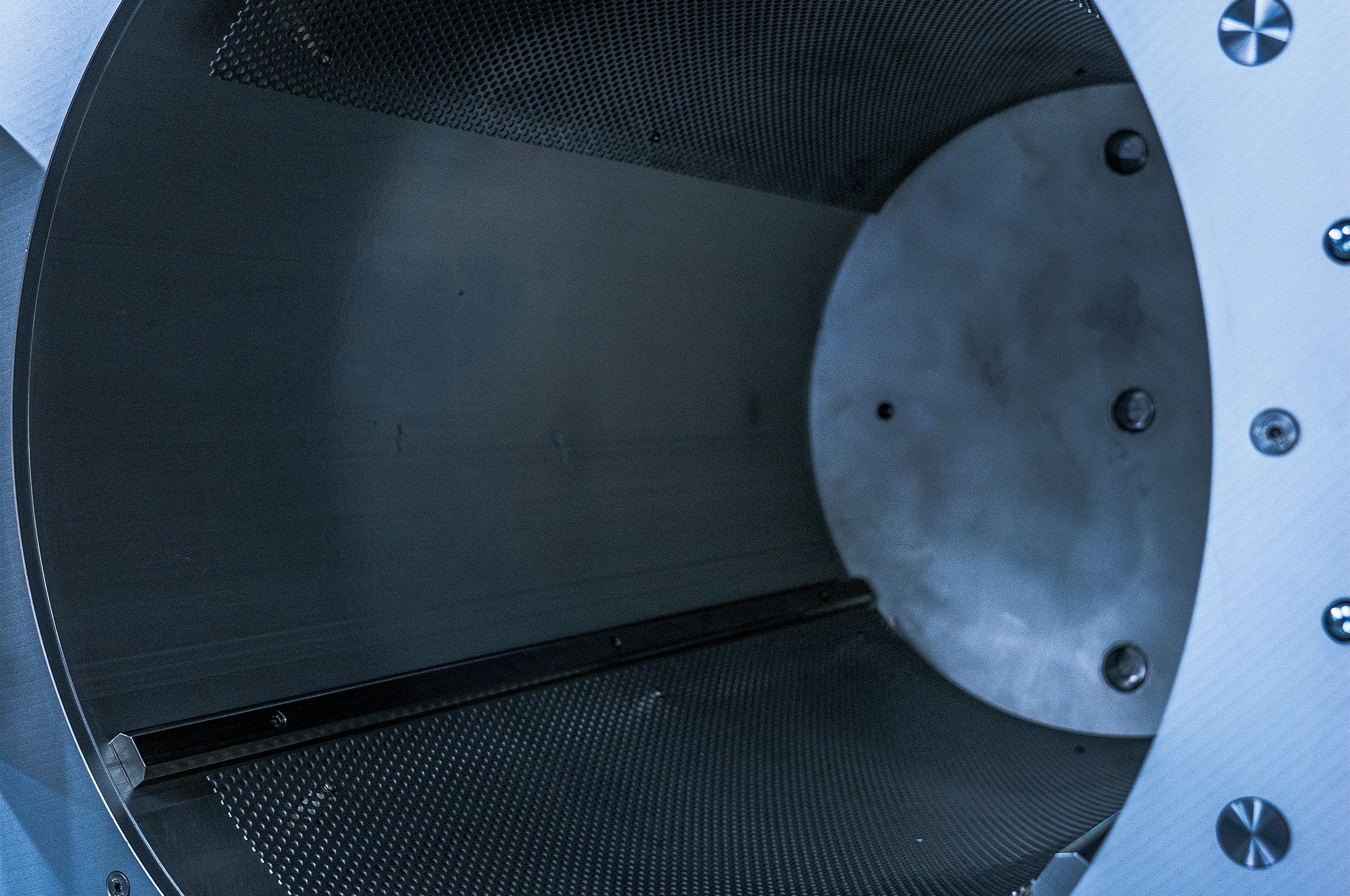
322l chamber
The Low-Pressure Plasma Tetra 320R system is equipped with a large chamber volume of 322 litres, making it ideally suited to large industrial components. It features a round aluminium chamber, which ensures particularly safe and stable industrial processes. The generous chamber size allows for the simultaneous treatment of complex or multiple components, making the Tetra 320R ideally suited to industrial production processes and series production applications. Thanks to the chamber’s round shape, the Tetra 320R plasma system offers a wide range of treatment options for a variety of applications.
Electrode
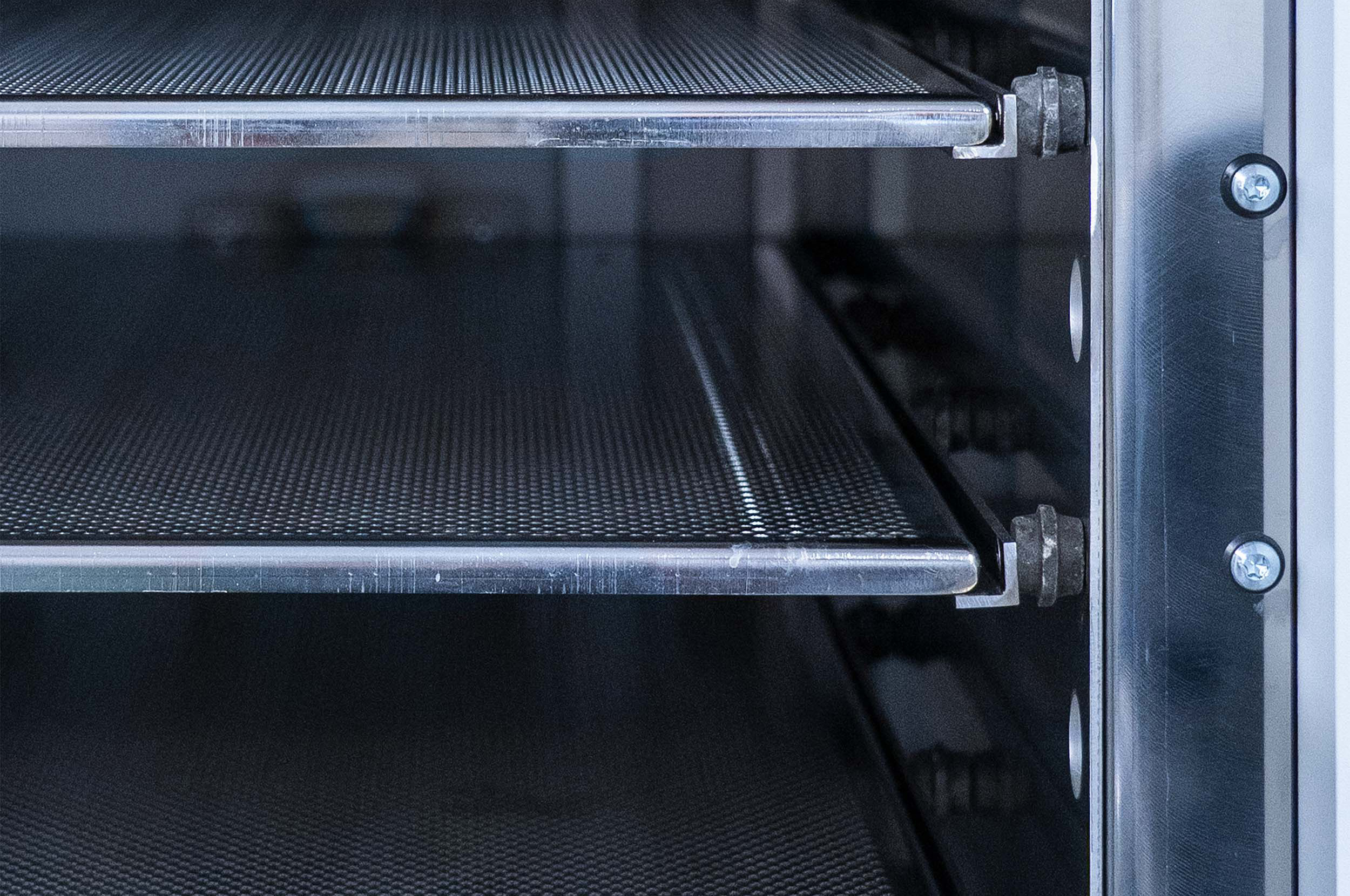
As technology advances, so do the requirements. With Diener electronic, companies benefit from a high level of investment security, as the Low-Pressure Plasma system Tetra 320R can be further developed to meet future requirements. The adaptable modular system allows you to choose between single-tier and multi-tier electrodes when designing the Tetra 320R, depending on the intended application. For complex, larger components that take up a lot of space in the chamber, an electrode that ensures uniform treatment is ideal. For many small components arranged across several levels, multi-tier electrodes or a rotary drum electrode are installed to ensure uniform treatment in every application.
Control
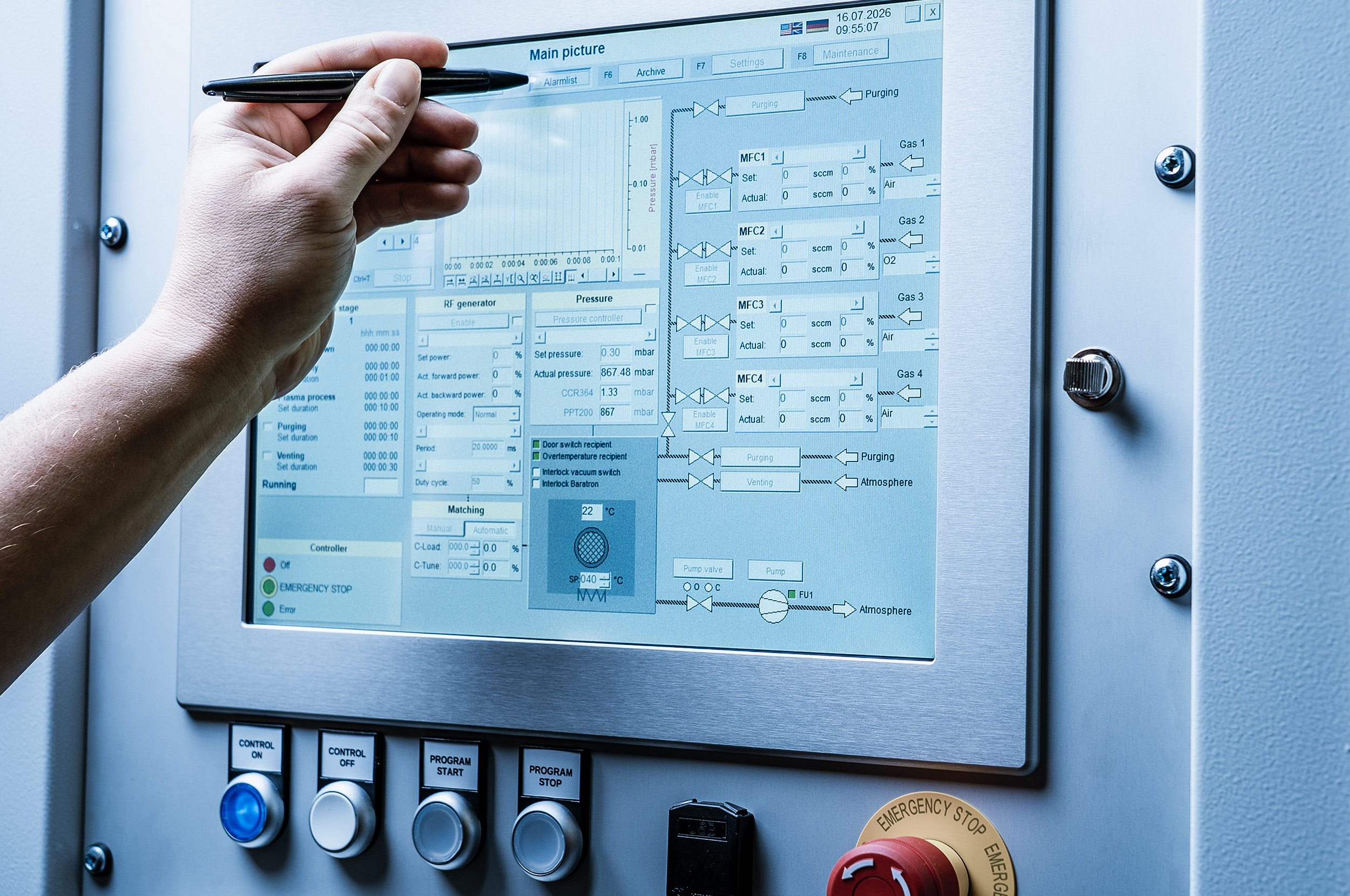
For demanding industrial production environments, the control unit – featuring a full PC running Windows IoT as the operating system for the Tetra 320R plasma system – is ideal. This ensures that process records, alarm logs, remote diagnostics and network connections are all provided. Process transparency and traceability form the basis for efficient and cost-effective production. A range of hardware configurations offers maximum flexibility for the processes to be carried out. The PI/PID pressure regulator enables pressure stabilisation, ensuring that processes are precisely reproducible at all times. With the Full PC control system, ongoing processes are displayed in a more comprehensive, detailed and easily comprehensible manner.
Technical data
Housing dimensions
Standalone
Control unit
Full PC (Windows 11 IoT Enterprise)
Vacuum chamber
Aluminium, Hinged door
⌀ 640 mm x
D 1000 mm; Volume approx. 322 liters
Optional: Depth variably expandable up to max. 3000 mm
Generator
80.00 kHz | Power output 0 - 1000 W
Gas supply
MFC (Mass flow controller)
Electrode
Single-tier electrode
Multi-tier electrode
RIE electrode
Pressure measurement
Pirani sensor
Capacity pressure gauge
Power supply
400 V | 16 - 125 A
Technical changes reserved.
Get a custom quote for Low-Pressure Plasma Tetra 320R?
Start an inquiryOther interesting products
FAQ Frequently Asked Questions
How can plasma activation be measured?
Contact angle / edge angle
The contact angle is the angle formed by the tangent to the drop’s contour and the surface of the solid at the three-phase point when observing the projection of the lying drop onto the solid. According to the physical definition, a surface with a contact angle of less than 90° is hydrophilic (wettable), whilst one with a contact angle greater than 90° is hydrophobic (non-wettable). The contact angle can be altered (increased or decreased) by means of plasma treatment. Using a suitable plasma process or by applying a suitable coating via a plasma process, hydrophilic surfaces can be converted into hydrophobic ones (and vice versa using hydrophilic layers).
Test inks from Diener electronic
Instruments for estimating surface energy: If the test ink contracts after being applied to the surface, the surface energy of the solid is lower than that of the ink; if wetting is maintained, the surface energy of the solid is equal to or greater than that of the liquid. By using a series of test inks with graduated surface energies, the total surface tension of a solid can thus be determined. However, the polar and non-polar components of the surface energy cannot be determined using this method.
Cross-cut test
To check the adhesion of paint finishes, a cross-cut test (standards: DIN EN ISO 2409 and ASTM D3369-02) is carried out. After painting, the paint layer on the plastic component is scored in a grid pattern. A standardised adhesive tape is then applied to the cross-hatch pattern, pressed down firmly and pulled off abruptly. If paint remains on the adhesive tape, the adhesion of the paint finish is poor. The cross-hatch test thus indicates the adhesion strength of paint layers on plastic parts.
Can the chamber door be opened whilst the machine is running?
Under normal circumstances, no – the negative pressure created by the vacuum pulls the door against the chamber housing.
Can you see through the sight glass?
Yes, depending on the material, it is possible to see inside the vacuum chamber.
Is the Tetra 320R plasma system suitable for continuous operation?
The Low Cost Tetra 320R system, designed for research and engineering, is not suitable for continuous operation.
Can temperature-sensitive components be processed using the Tetra 320R?
Yes, as this is a cold plasma, the low-pressure plasma systems Tetra 320R from Diener electronic are suitable for temperature-sensitive components.
Can ESD-sensitive components be handled using the Tetra 320R?
Yes, this is possible using low-pressure plasma of the Tetra 320R. A trial can be carried out in our process department on request.
Is there an alternative to hydrogen in the Tetra 320R system?
Upon request to Diener electronic, a hydrogen generator or water vapour may be considered as an alternative to hydrogen for the Tetra 320R system.
Can the components be touched after treatment?
Yes, it is safe – we recommend handling it with care and wearing gloves to prevent contamination. This is because plasma removes organic, but not inorganic, contaminants. For example, the sweat from fingerprints contains salts (inorganic contaminants).
Are exhaust air filters required for the Tetra 320R?
Yes, all systems must be connected to a proper exhaust system, regardless of the type of gas used. Nitrogen oxides, exhaust gases, fine oil mist (from oil pumps), etc. are produced, which must not be inhaled; furthermore, the gases are often acidic, meaning they accelerate the rusting of surrounding parts, machinery and equipment.
What connectivity options are available for the software control system on the Tetra 320R system?
With its full PC control system, the Tetra 320R plasma system from Diener electronic offers the following connection options, such as:
- higher-level control systems, e.g. via Profinet
- MES systems, e.g. via OPC UA
- Database connection via ODBC